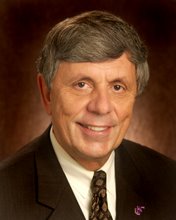
As I mentioned in previous blog posts, we are halfway through a Futures Task Force II (FTF II) planning process. As you will recall, Futures Task Force I was implemented in 2000, and using scenario planning, was completed in 2001.
Based on this experience, we identified that the two major drivers of significant change for all of health care, including CHRISTUS Health, would be declining reimbursement and the rapid introduction of new and predominately non-invasive technology.
Based on these findings, which continue to be true to this day, 19 recommendations were articulated and have been incorporated in our three-year rolling process on an annual basis. Because most of these recommendations have been fully implemented, we began FTF II six months ago utilizing scenario planning and learning journeys with the goal of having fully gained and reviewed the applicable knowledge by December of 2008 with a set of new recommendations coming forward at our Governance Conference in February of 2009, our 10th anniversary.
One such learning journey that I have previously discussed was our 3-day trip to Canada where we focused on three major areas:
1. The Canadian health care system, its successes and challenges as well as reviewing unique care models which they have developed;
2. Understanding the learnings from the SARS epidemic that could be applied to a pandemic in the U.S. or even worldwide and
3. Visiting and learning from the staff of an innovation institute which is associated with an outstanding university and has been in place for nine years.
Let me begin by summarizing the learnings we gained from the Canadian health care system overall.
For years, Canada has had a truly socialized health care system, which means that they provide health insurance to cover basic health care for all registered Canadians. This includes the large immigrant population, which was discussed in the prior blog, because Canada encourages immigration from multiple countries to supplement the population which is needed to fill their many job opportunities.
This program provides hospital care and primary outpatient care. The program recognizes that there are seven determinants of health care, of which hospitals are only one. Therefore, they believe that building more hospitals and buying more technology will not and has not improved the status of health care in Canada. They recognize that the other six determinants must therefore have intense focus and must also be supported by governmental grants and subsides. These include:
1. Primary outpatient locations
2. Schools
3. After school programs for working parents
4. Appropriate housing
5. Appropriate nutrition
6. Appropriate psychological and psychiatric services
In order to address these issues with a multi-disciplinary team, each community—with community volunteers—are encouraged to develop a business plan for a community clinic and center where all of these activities can be addressed. If they meet certain levels of quality and service in each of these areas, the community center is usually approved and then funded.
By placing a great deal of emphasis on these six other determinants of health care, they have proven that they can keep a large portion of the population in relatively good health and also manage a greater array of chronic illnesses on an outpatient basis.
Their emphasis on the importance of wellness and prevention as well as the need to provide a medical home for each and every patient appear to be hallmarks of their greatest successes. However, this system has many of the same negatives that many other countries must deal with, namely the rising costs of health care and therefore the need for the government to identify other means of securing additional funds. Of course this generally leads to raising taxes, which is never well-received.
Therefore, priorities for funding must be identified. Those things that are not rapidly funded include elective surgical procedures such as hip and knee replacements as well as cosmetic surgery and surgeries which tend to be somewhat controversial (like bariatric surgery to control type II diabetes). Therefore, there is a waiting list for these procedures which numerous people find unacceptable. Therefore, they are seeking other ways to obtain this care, which include both medical travel and the acquisition of private insurance.
Overall, however, based on conversations with administrators of hospitals, physicians and nurses as well as a small array of patients, I found that all believe that for the most part, the values provided by the Canadian health care system outweigh the negatives that were just discussed.
What, then, can health care providers in the U.S. as well as CHRISTUS Health learn from this experience?
First, we learn that all the determinants of health care must be considered in developing a redesigned health care system. Second, a great deal of money and attention must be given to providing primary care medical homes and developing sound preventive and wellness programs. Third, clear criteria must be developed for elective procedures based on evidence-based medicine so that when these criteria are met, the patient somehow is given the ability to have this care. Fourth, perhaps a mixture of governmentally-supported health care for primary and non-elective hospital procedures is workable and in fact should be supplemented by private insurance for those who can afford it to cover the non-elective procedures, particularly if they are desired before the medically indicated criteria are met.
In summary, as I have said before, we all know that the U.S. health care system must eventually be redesigned, either in an evolutionary or revolutionary manner. It would appear that the learning journey processes that we are using in FTF II are an outstanding tool to be utilized to gather the knowledge and learnings that we should be brining to the table when this redesign process is initiated.
Wednesday, April 30, 2008

Wednesday, April 23, 2008
Multiculturalism & Diversity
As I mentioned in my last blog post, our learning journey to Canada as part of Futures Task Force II gave us the ability to explore the strengths and weaknesses of the Canadian health care system.
We also learned a great deal from reviewing the Canadian experience with multiculturalism and diversity. I’d like to reflect briefly on these learnings and what it means for us as providers of health care in the U.S.
Although it varies with regard to both the numbers of people and different populations in various countries, every country today has some degree of diversity within it. Over the last 20 years in the U.S., for instance, we have seen the number one minority become Hispanics. In addition, particularly in our larger cities, but now even in many of our suburban areas, we have as many as 20 different cultures represented in either distinct or integrated communities.
Although these diverse populations often experience the same diseases, their cultural traditions favor some treatment modalities over others. These include both the technical or “hard” components of health care, as well as the holistic or “soft” components of the delivery process.
In order for anyone to fully benefit from their treatments, they must be comfortable with the people who deliver them as well as the components of the treatment plan. This requires us all to be committed to becoming more culturally competent as we continue our journey as health care providers.
A clear example of this is recognizing that the family ties in Mexico and in the Hispanic populations in the U.S. are often much stronger than those in other Americans. Consequently, at the time the Hispanic patient presents, he/she is often accompanied by his/her entire immediate family, and often distant relatives. This is even more apparent when a sick child is brought for evaluation. Consequently, we as providers must be comfortable with a much larger number of people in our exam rooms often answering the same question with different voices and different thoughts. In addition, we must become comfortable with the language barrier and depend on one of these relatives to be the translator for the patient who cannot speak English. And finally, we must be fully committed to educating the bilingual family member, for they will then in turn have to be the educator and caregiver of the patient.
This obviously requires more time and effort, but in the end, if getting our patient better is our primary goal, then this is the journey we must take because of the increasingly diverse people who will enter our facilities in the future.
In addition, this also demands that we design our clinics and hospitals differently. If indeed this extended family is part of the treatment process, our waiting rooms and our exam rooms must be larger to accommodate this larger crowd. In addition, our hospital rooms must also be larger, and even provide an opportunity for at least one family member to sleep over with adult patients during their hospital stays.
Because Canada encourages immigration from all countries to enhance their population growth in order to support their employment needs and because they see the importance and added value of a culturally diverse country, they have committed to studying these various cultures, what their traditions demand in health care and to the best of their ability to meet these demands at their delivery sites.
Needless to say, the changes required to create these diverse treatment plans are often met with some resistance, but the outweighing positive is that the practitioners have learned that in fact some of the treatments carried out in these diverse cultures and some of the methodologies which they demand are really better than some of the traditional methods that have been utilized by us in the past.
They recognize that ultimately, the best practices must be based on evidence, and are working very hard to do research on these “softer” methods of health care delivery to make sure that the added value they perceive can be demonstrated to others who have not utilized them in the past. As the world becomes “flatter,” it is inevitable that the diversity of cultures who present to our health care systems for treatment will increase.
I recognize that most of us were not exposed to many of these traditions in our medical school training. But I know that in order to be successful in the future, we will need to be more open to integrating traditional and non-traditional medical modalities to a greater degree if the diverse patients we see are to be maintained in a healthy state both physically and mentally.
We also learned a great deal from reviewing the Canadian experience with multiculturalism and diversity. I’d like to reflect briefly on these learnings and what it means for us as providers of health care in the U.S.
Although it varies with regard to both the numbers of people and different populations in various countries, every country today has some degree of diversity within it. Over the last 20 years in the U.S., for instance, we have seen the number one minority become Hispanics. In addition, particularly in our larger cities, but now even in many of our suburban areas, we have as many as 20 different cultures represented in either distinct or integrated communities.
Although these diverse populations often experience the same diseases, their cultural traditions favor some treatment modalities over others. These include both the technical or “hard” components of health care, as well as the holistic or “soft” components of the delivery process.
In order for anyone to fully benefit from their treatments, they must be comfortable with the people who deliver them as well as the components of the treatment plan. This requires us all to be committed to becoming more culturally competent as we continue our journey as health care providers.
A clear example of this is recognizing that the family ties in Mexico and in the Hispanic populations in the U.S. are often much stronger than those in other Americans. Consequently, at the time the Hispanic patient presents, he/she is often accompanied by his/her entire immediate family, and often distant relatives. This is even more apparent when a sick child is brought for evaluation. Consequently, we as providers must be comfortable with a much larger number of people in our exam rooms often answering the same question with different voices and different thoughts. In addition, we must become comfortable with the language barrier and depend on one of these relatives to be the translator for the patient who cannot speak English. And finally, we must be fully committed to educating the bilingual family member, for they will then in turn have to be the educator and caregiver of the patient.
This obviously requires more time and effort, but in the end, if getting our patient better is our primary goal, then this is the journey we must take because of the increasingly diverse people who will enter our facilities in the future.
In addition, this also demands that we design our clinics and hospitals differently. If indeed this extended family is part of the treatment process, our waiting rooms and our exam rooms must be larger to accommodate this larger crowd. In addition, our hospital rooms must also be larger, and even provide an opportunity for at least one family member to sleep over with adult patients during their hospital stays.
Because Canada encourages immigration from all countries to enhance their population growth in order to support their employment needs and because they see the importance and added value of a culturally diverse country, they have committed to studying these various cultures, what their traditions demand in health care and to the best of their ability to meet these demands at their delivery sites.
Needless to say, the changes required to create these diverse treatment plans are often met with some resistance, but the outweighing positive is that the practitioners have learned that in fact some of the treatments carried out in these diverse cultures and some of the methodologies which they demand are really better than some of the traditional methods that have been utilized by us in the past.
They recognize that ultimately, the best practices must be based on evidence, and are working very hard to do research on these “softer” methods of health care delivery to make sure that the added value they perceive can be demonstrated to others who have not utilized them in the past. As the world becomes “flatter,” it is inevitable that the diversity of cultures who present to our health care systems for treatment will increase.
I recognize that most of us were not exposed to many of these traditions in our medical school training. But I know that in order to be successful in the future, we will need to be more open to integrating traditional and non-traditional medical modalities to a greater degree if the diverse patients we see are to be maintained in a healthy state both physically and mentally.
Wednesday, April 16, 2008
Futures Task Force II Journeys to Canada
Nine members of the CHRISTUS Health Futures Task Force II committee (including myself) participated in a four-day scout trip to Toronto, Canada from May 28-April 2. The purpose of this “learning journey” was to explore the strengths and weaknesses of the Canadian health care system, learn form the Canadian experience with multiculturalism and diversity, learn from Toronto’s experience during the SARS pandemic experienced in 2003 and further explore examples of innovation.
Over the next few weeks, I will dedicate my blog to each of these areas, highlighting the common themes which emerged from this trip, including:
*That cooperation and collaboration in emerging global business models is possible
*There is value in partnershipping with what once seemed like unlikely allies
*Individuals are catalysts for change, but communities are required to make things of significance happen. It is important to identify the leverage points for changing critical elements of the system rather than taking on the whole system and failing.
*Innovation and the creation of new solutions through the innovative processes require significant input and dialogue with others.
Let us now look at our learnings regarding the Canadian health care system. In a prior blog post, I mentioned the five components that are required for a successful universal health care system. And I was pleased to find that the Canadian health system embraced them all, to a significant degree.
Clearly, they are committed to providing basic health coverage for all and do such through governmental funding. This includes full payment of standardized charges for hospitals and physicians. In addition, they have addressed outpatient care through establishing models called community health centers. Resources in communities must come together to create a business plan to implement these centers, submitting a request for funding to both regional and federal governmental bodies. If they meet all the requirements for a multi-faceted approach to health care including prevention and education, these are always funded to the requested levels.
Each of these centers must provide all their care in outpatient settings and provide social services to address the nonphysical needs of each and every patient. In addition, they must collaborate with schools in their areas to support health care education as well as collaborating with other agencies to provide a full range of preventive health care.
Clearly, these embrace the five building blocks I reviewed before and referred to above. The health care profession in Canada has a clear understanding that there are seven major determinants of health, only two of which are physicians and hospitals, thereby recognizing the importance of these other building blocks. It is clear that through this governmental funding, then, most basic health care and preventive health care can be provided through these community centers, and basic inpatient and physician care can additionally be provided and reimbursed through their present physician office and hospital networks. It was interesting to note that Canada also provides this level of care for all immigrants into their country. This is key, since Canada encourages immigration from other countries to meet their employment needs, and at the present time, there are over 47 nationalities which represent more than 50 percent of the Canadian population.
In addition, this requires that in providing this basic inpatient and outpatient care, health care professionals must develop a high level of cultural competencies in order to care for and meet the expectations of these diverse cultures. One such example of this sophistication is the presence of clinics we visited that only serve members of the Aborigine tribes and their descendents or spouses.
As you might know, these tribes were significantly disadvantaged when Canada was inhabited by the French, just as Native Americans were significantly disadvantaged in the U.S. The Aborigines, like all Indian tribes, relied heavily on medicine men and women, who used natural remedies including many herbs in their healing processes and ceremonies. Recognizing the importance of this tradition and firmly-held belief by this diverse population that these treatment modalities are important, the centers serving these tribes fully integrate both traditional and these alternate types of medical therapies.
A psychiatric patient, for instance, is seen not only by a certified Psychiatrist and/or Psychologist, but would also be given complimentary herbal medicine and might participate in a chanting or drum ceremony to deal with the negative spirits which are contributing to their disease process.
Recognizing that maintaining and enhancing the knowledge of this naturalistic medicine is important, Canada has one of only five certified medical schools which grant a Doctor of Natural Medicine degree. We visited this facility and saw first-hand how again these skills are taught, studied and monitored to make sure they are bringing added value to the total health care package.
If what we have discussed this far seems ideal, then what are the cons of a universally provided system of basic health care? Clearly, we saw the same thing in Canada that is experienced in other countries that provide universal health care. That is, that the majority of dollars which are required to fund basic health care for all leaves little money to support specialty care, especially elective specialty care, which would include procedures such as joint replacements and cosmetic surgeries.
In Canada, like England and Ireland and other European countries, an insurance system has been developed so those people who can afford it can buy coverage for this specialty care or pay cash out of pocket at the time the services are rendered.
For those without this layer of coverage, specialty care is never denied, but does force them to take their place in what can become rather long waiting lines before their treatment is received. So what does this tell us about how we might proceed with the redesign of health care if any of us are invited to come to the table for a hopefully new health care design commission that will be mandated by the new President of the U.S.? I would suggest it reinforces the following:
1. The five building blocks are the right ones, and are essential.
2. Most of health care can be rendered in outpatient settings by not only medical doctors, but other health care professionals as well.
3. There is probably a significant place for naturalistic medicine or alternative, complementary medicine.
4. The more focus on preventive health care, the less cost will be required for diagnosis and treatment.
5. If the guidelines are clear and standardized as to what is required in community health centers, the talent in communities can organize themselves to implement such centers after funding is received.
Whether revolutionary or evolutionary, health care in the U.S. must be redesigned, and learning journeys such as the one we experienced in Canada are a great way of learning the best practices in providing universal health care as well as preventing us from incorporating those things that do not work into the plan.
Over the next few weeks, I will dedicate my blog to each of these areas, highlighting the common themes which emerged from this trip, including:
*That cooperation and collaboration in emerging global business models is possible
*There is value in partnershipping with what once seemed like unlikely allies
*Individuals are catalysts for change, but communities are required to make things of significance happen. It is important to identify the leverage points for changing critical elements of the system rather than taking on the whole system and failing.
*Innovation and the creation of new solutions through the innovative processes require significant input and dialogue with others.
Let us now look at our learnings regarding the Canadian health care system. In a prior blog post, I mentioned the five components that are required for a successful universal health care system. And I was pleased to find that the Canadian health system embraced them all, to a significant degree.
Clearly, they are committed to providing basic health coverage for all and do such through governmental funding. This includes full payment of standardized charges for hospitals and physicians. In addition, they have addressed outpatient care through establishing models called community health centers. Resources in communities must come together to create a business plan to implement these centers, submitting a request for funding to both regional and federal governmental bodies. If they meet all the requirements for a multi-faceted approach to health care including prevention and education, these are always funded to the requested levels.
Each of these centers must provide all their care in outpatient settings and provide social services to address the nonphysical needs of each and every patient. In addition, they must collaborate with schools in their areas to support health care education as well as collaborating with other agencies to provide a full range of preventive health care.
Clearly, these embrace the five building blocks I reviewed before and referred to above. The health care profession in Canada has a clear understanding that there are seven major determinants of health, only two of which are physicians and hospitals, thereby recognizing the importance of these other building blocks. It is clear that through this governmental funding, then, most basic health care and preventive health care can be provided through these community centers, and basic inpatient and physician care can additionally be provided and reimbursed through their present physician office and hospital networks. It was interesting to note that Canada also provides this level of care for all immigrants into their country. This is key, since Canada encourages immigration from other countries to meet their employment needs, and at the present time, there are over 47 nationalities which represent more than 50 percent of the Canadian population.
In addition, this requires that in providing this basic inpatient and outpatient care, health care professionals must develop a high level of cultural competencies in order to care for and meet the expectations of these diverse cultures. One such example of this sophistication is the presence of clinics we visited that only serve members of the Aborigine tribes and their descendents or spouses.
As you might know, these tribes were significantly disadvantaged when Canada was inhabited by the French, just as Native Americans were significantly disadvantaged in the U.S. The Aborigines, like all Indian tribes, relied heavily on medicine men and women, who used natural remedies including many herbs in their healing processes and ceremonies. Recognizing the importance of this tradition and firmly-held belief by this diverse population that these treatment modalities are important, the centers serving these tribes fully integrate both traditional and these alternate types of medical therapies.
A psychiatric patient, for instance, is seen not only by a certified Psychiatrist and/or Psychologist, but would also be given complimentary herbal medicine and might participate in a chanting or drum ceremony to deal with the negative spirits which are contributing to their disease process.
Recognizing that maintaining and enhancing the knowledge of this naturalistic medicine is important, Canada has one of only five certified medical schools which grant a Doctor of Natural Medicine degree. We visited this facility and saw first-hand how again these skills are taught, studied and monitored to make sure they are bringing added value to the total health care package.
If what we have discussed this far seems ideal, then what are the cons of a universally provided system of basic health care? Clearly, we saw the same thing in Canada that is experienced in other countries that provide universal health care. That is, that the majority of dollars which are required to fund basic health care for all leaves little money to support specialty care, especially elective specialty care, which would include procedures such as joint replacements and cosmetic surgeries.
In Canada, like England and Ireland and other European countries, an insurance system has been developed so those people who can afford it can buy coverage for this specialty care or pay cash out of pocket at the time the services are rendered.
For those without this layer of coverage, specialty care is never denied, but does force them to take their place in what can become rather long waiting lines before their treatment is received. So what does this tell us about how we might proceed with the redesign of health care if any of us are invited to come to the table for a hopefully new health care design commission that will be mandated by the new President of the U.S.? I would suggest it reinforces the following:
1. The five building blocks are the right ones, and are essential.
2. Most of health care can be rendered in outpatient settings by not only medical doctors, but other health care professionals as well.
3. There is probably a significant place for naturalistic medicine or alternative, complementary medicine.
4. The more focus on preventive health care, the less cost will be required for diagnosis and treatment.
5. If the guidelines are clear and standardized as to what is required in community health centers, the talent in communities can organize themselves to implement such centers after funding is received.
Whether revolutionary or evolutionary, health care in the U.S. must be redesigned, and learning journeys such as the one we experienced in Canada are a great way of learning the best practices in providing universal health care as well as preventing us from incorporating those things that do not work into the plan.
Wednesday, April 9, 2008
Fostering a Culture of Philanthropy within CHRISTUS Health
When CHRISTUS Health was created in 1999 by the joining of the health care ministries of the Sisters of Charity of the Incarnate Word of Houston and the Sisters of Charity of the Incarnate Word of San Antonio, we recognized the deep commitment both Congregations had to funding these ministries through strong philanthropy programs.
We also realized that if reimbursements continued their downward trend, finding other funding for our health care ministry would be an absolute necessity.
Therefore, we as CHRISTUS immediately launched a number of strategic efforts to elevate philanthropy within the newly organized system. In 2001 and again in 2003, the Senior Leadership Team undertook concerted efforts to elevate Philanthropy as one of the foundations of the Journey to Excellence. A major study, with recommendations for the program, was completed in 2001 by an outside consultant. Enhancements to the program were implemented. In 2003, a system director of philanthropy was appointed.
Also as a part of the effort to elevate philanthropy, the CHRISTUS Academy Class of 2004-2005 selected a review of Philanthropy as one of their class projects. The Academy Project served as a stimulus for the continued evolution of the CHRISTUS Philanthropy programs. The increased awareness and understanding of the importance of Philanthropy within CHRISTUS was greatly enhanced as a result.
Those efforts have been paying off. Record reporting--although sketchy initially--indicates that the various system foundations raised approximately $14 million in 1999. This has grown consistently over the years to approximately $20M in Fiscal Year 03, and a peak of $28 million in FY06. The system programs have set a collective goal of $29 million for FY08.
The following is a brief summary and status report of the major efforts and accomplishments over the last nine years aimed at elevating philanthropy within CHRISTUS Health:
Professional Leadership
It is obvious to us that fundraising is most successful at the local or regional level. People want to give to their local entities and feel less benevolence to a more anonymous “CHRISTUS Health.” Therefore, we have organized our philanthropy programs so that regional foundations raise money locally. With support from the CHRISTUS system, there are now foundations/development programs in all major locations, and most have hired certified professional development directors (CDOs) for their programs. We have also spearheaded an effort to integrate those professionals into the strategic planning/leadership teams of the regions in which they work.
We also recommended that all CDOs report directly to the CEOs of the organizations where they are located. In addition, all CHRISTUS Health philanthropy professionals have been encouraged to obtain certification in fundraising, specifically the CFRE designation (Certified Fund Raising Executive).
System Support of Regional Philanthropy Efforts
There have been concerted efforts over the last nine years to encourage continuing education for the CDOs and their staff. The system philanthropy office continues to provide membership for all fundraising staff in the Association of Healthcare Philanthropy (AHP) and in The Advisory Board’s Philanthropy Leadership Council. Both organizations provide extensive audio conferences, seminars and resource materials. A number of CDOs have been able to attend the prestigious AHP Madison Institute for Healthcare Philanthropy.
The system philanthropy office has also developed a Philanthropy Council to promote system consistency and improve communication, identity and networking, which meets at least twice a year. In fact, many system departments throughout CHRISTUS have called these councils together in their specific areas, and we have been told by our Associates out in the regions that these are wonderful resources that allow them to seek advice and share best practices, programs and ideas.
The system office has also developed an internal newsletter to highlight the accomplishments of the various philanthropy programs, and to communicate changes and important issues. Our Philanthropy report has also been refined in collaboration with Accounting in order to ensure that we do not report certain items twice, like earnings and interest. We also worked to clarify the audit process that each foundation should follow.
As I have mentioned in past blog posts, we also host an annual Foundation Board Chair Meeting for education and networking between the chairs of all the foundation boards throughout CHRISTUS. This has also led to an increased emphasis on coordination between governance boards of the foundations and regional governance boards. New foundation board members are now being invited to our general System Board Orientation.
The system office has helped develop shared tools, campaign resources, and other “deliverables” over the last nine years. A system resource library has also been developed. Great strides have been made re: a closer working partnership between Philanthropy and Public relations/Marketing associates in all the regions. To model the desired result, Philanthropy now sits on the Marketing/Communication Council and vice versa.
The CHRISTUS Health philanthropy program has also spurred the updating and modernizing of foundation websites to make them capable of e-philanthropy. Along these same lines, all regions have been migrated to the same development database software system, Blackbaud’s “Raiser’s Edge”, considered the best in the industry.
Strategic Planning – Productivity Goals
All foundations are seeking to achieve an established level of sophistication in terms of developing annual strategic plans and setting dollar goals in the areas of annual giving, major gifts, and planned giving. Reporting is now emphasizing both total dollars raised and ROI numbers, and these are being benchmarked against available industry standards as they are developed. These goals also reflect the total dollars needed as a result of the strategic planning process that includes the regional senior leadership teams and regional foundation boards.
Foundations are now setting annual philanthropy goals in terms of how much money will be raised and are therefore developing annual strategic plans for fundraising activities. This information--especially the total dollars raised-- is reported on quarterly to SLT and CHRISTUS Health Board.
Major Gifts
All foundations have put a new and/or renewed emphasis on major gifts and the key role they play in the success of any philanthropy program. Foundations are beginning to put a more major emphasis on “major giving” programs and strategies and less of an emphasis on special events fundraising.
Planned Giving
Over the last nine years, foundations have been encouraged to put a new emphasis on a planned giving strategy. Most recently, foundations have been encouraged to offer their donors and friends charitable estate planning. It is projected that all regional foundations will have established strong planned giving programs, and that planned giving revenues will represent the highest area of giving within CHRISTUS Health’s varied giving programs.
CHRISTUS Health Foundation
The CHRISTUS Health Foundation was incorporated in February of 2006. We realized that we needed a formal foundation that could apply for grants for the entire system and accept donations in those situations where the donor wanted to give to CHRISTUS. This further positions CHRISTUS and its entities as a viable and attractive recipient for philanthropic dollars and good steward of donated resources is a critical philanthropy strategy going forward.
Philanthropy’s Contribution to our Communities
CHRISTUS Health and its philanthropic entities have become leaders in caring for the health of our communities and are being seen more and more as good stewards of community resources. Regional foundations are beginning to participate by issuing grants, including challenge grants for community health care projects and by participating in community strategic planning, fundraising and evaluation. We have set a goal that 1/3 of all philanthropic dollars raised will be used to support community programs. This is sometimes called “social philanthropy” or “venture philanthropy”. CHRISTUS Health is one of the first health care systems to implement this new trend within health care philanthropy.
New Markets for Philanthropy
Since 1999, our philanthropy program has expanded into several new areas. There are continuing goals to evolve the development programs at our continuing care retirement communities, as well as the development programs at Hospice, CHRISTUS HomeCare, and Dubuis Health system into foundations with active local boards, staff, etc.
We are also striving to strengthen, improve, and grow the philanthropy programs in Mexico, perhaps developing one major new foundation for CHRISTUS Muguerza’s clinics and community programs based in Monterrey.
We also realized that if reimbursements continued their downward trend, finding other funding for our health care ministry would be an absolute necessity.
Therefore, we as CHRISTUS immediately launched a number of strategic efforts to elevate philanthropy within the newly organized system. In 2001 and again in 2003, the Senior Leadership Team undertook concerted efforts to elevate Philanthropy as one of the foundations of the Journey to Excellence. A major study, with recommendations for the program, was completed in 2001 by an outside consultant. Enhancements to the program were implemented. In 2003, a system director of philanthropy was appointed.
Also as a part of the effort to elevate philanthropy, the CHRISTUS Academy Class of 2004-2005 selected a review of Philanthropy as one of their class projects. The Academy Project served as a stimulus for the continued evolution of the CHRISTUS Philanthropy programs. The increased awareness and understanding of the importance of Philanthropy within CHRISTUS was greatly enhanced as a result.
Those efforts have been paying off. Record reporting--although sketchy initially--indicates that the various system foundations raised approximately $14 million in 1999. This has grown consistently over the years to approximately $20M in Fiscal Year 03, and a peak of $28 million in FY06. The system programs have set a collective goal of $29 million for FY08.
The following is a brief summary and status report of the major efforts and accomplishments over the last nine years aimed at elevating philanthropy within CHRISTUS Health:
Professional Leadership
It is obvious to us that fundraising is most successful at the local or regional level. People want to give to their local entities and feel less benevolence to a more anonymous “CHRISTUS Health.” Therefore, we have organized our philanthropy programs so that regional foundations raise money locally. With support from the CHRISTUS system, there are now foundations/development programs in all major locations, and most have hired certified professional development directors (CDOs) for their programs. We have also spearheaded an effort to integrate those professionals into the strategic planning/leadership teams of the regions in which they work.
We also recommended that all CDOs report directly to the CEOs of the organizations where they are located. In addition, all CHRISTUS Health philanthropy professionals have been encouraged to obtain certification in fundraising, specifically the CFRE designation (Certified Fund Raising Executive).
System Support of Regional Philanthropy Efforts
There have been concerted efforts over the last nine years to encourage continuing education for the CDOs and their staff. The system philanthropy office continues to provide membership for all fundraising staff in the Association of Healthcare Philanthropy (AHP) and in The Advisory Board’s Philanthropy Leadership Council. Both organizations provide extensive audio conferences, seminars and resource materials. A number of CDOs have been able to attend the prestigious AHP Madison Institute for Healthcare Philanthropy.
The system philanthropy office has also developed a Philanthropy Council to promote system consistency and improve communication, identity and networking, which meets at least twice a year. In fact, many system departments throughout CHRISTUS have called these councils together in their specific areas, and we have been told by our Associates out in the regions that these are wonderful resources that allow them to seek advice and share best practices, programs and ideas.
The system office has also developed an internal newsletter to highlight the accomplishments of the various philanthropy programs, and to communicate changes and important issues. Our Philanthropy report has also been refined in collaboration with Accounting in order to ensure that we do not report certain items twice, like earnings and interest. We also worked to clarify the audit process that each foundation should follow.
As I have mentioned in past blog posts, we also host an annual Foundation Board Chair Meeting for education and networking between the chairs of all the foundation boards throughout CHRISTUS. This has also led to an increased emphasis on coordination between governance boards of the foundations and regional governance boards. New foundation board members are now being invited to our general System Board Orientation.
The system office has helped develop shared tools, campaign resources, and other “deliverables” over the last nine years. A system resource library has also been developed. Great strides have been made re: a closer working partnership between Philanthropy and Public relations/Marketing associates in all the regions. To model the desired result, Philanthropy now sits on the Marketing/Communication Council and vice versa.
The CHRISTUS Health philanthropy program has also spurred the updating and modernizing of foundation websites to make them capable of e-philanthropy. Along these same lines, all regions have been migrated to the same development database software system, Blackbaud’s “Raiser’s Edge”, considered the best in the industry.
Strategic Planning – Productivity Goals
All foundations are seeking to achieve an established level of sophistication in terms of developing annual strategic plans and setting dollar goals in the areas of annual giving, major gifts, and planned giving. Reporting is now emphasizing both total dollars raised and ROI numbers, and these are being benchmarked against available industry standards as they are developed. These goals also reflect the total dollars needed as a result of the strategic planning process that includes the regional senior leadership teams and regional foundation boards.
Foundations are now setting annual philanthropy goals in terms of how much money will be raised and are therefore developing annual strategic plans for fundraising activities. This information--especially the total dollars raised-- is reported on quarterly to SLT and CHRISTUS Health Board.
Major Gifts
All foundations have put a new and/or renewed emphasis on major gifts and the key role they play in the success of any philanthropy program. Foundations are beginning to put a more major emphasis on “major giving” programs and strategies and less of an emphasis on special events fundraising.
Planned Giving
Over the last nine years, foundations have been encouraged to put a new emphasis on a planned giving strategy. Most recently, foundations have been encouraged to offer their donors and friends charitable estate planning. It is projected that all regional foundations will have established strong planned giving programs, and that planned giving revenues will represent the highest area of giving within CHRISTUS Health’s varied giving programs.
CHRISTUS Health Foundation
The CHRISTUS Health Foundation was incorporated in February of 2006. We realized that we needed a formal foundation that could apply for grants for the entire system and accept donations in those situations where the donor wanted to give to CHRISTUS. This further positions CHRISTUS and its entities as a viable and attractive recipient for philanthropic dollars and good steward of donated resources is a critical philanthropy strategy going forward.
Philanthropy’s Contribution to our Communities
CHRISTUS Health and its philanthropic entities have become leaders in caring for the health of our communities and are being seen more and more as good stewards of community resources. Regional foundations are beginning to participate by issuing grants, including challenge grants for community health care projects and by participating in community strategic planning, fundraising and evaluation. We have set a goal that 1/3 of all philanthropic dollars raised will be used to support community programs. This is sometimes called “social philanthropy” or “venture philanthropy”. CHRISTUS Health is one of the first health care systems to implement this new trend within health care philanthropy.
New Markets for Philanthropy
Since 1999, our philanthropy program has expanded into several new areas. There are continuing goals to evolve the development programs at our continuing care retirement communities, as well as the development programs at Hospice, CHRISTUS HomeCare, and Dubuis Health system into foundations with active local boards, staff, etc.
We are also striving to strengthen, improve, and grow the philanthropy programs in Mexico, perhaps developing one major new foundation for CHRISTUS Muguerza’s clinics and community programs based in Monterrey.
Wednesday, April 2, 2008
Planning and the Future of Health Care
In the next several weeks, the CHRISTUS Health FY09 budget will be in its final stages of preparation. As we are traveling toward our tenth year, I am reminded of our commitment in 1999 to our three-dimensional integration process, which demanded that we incorporate into our operational and capital budgets all the strategies which we hope to accomplish in the upcoming fiscal year.
As I indicated in a previous post, this fiscal year is always looked at two prior times before it becomes the fiscal year in which we are operating. With our three-year rolling planning process, we call the third year out our “quicksand year,” where we are making educated decisions based on the best data we have available. These decisions are then again reviewed as the year becomes the second year out, which we call our “wet cement year,” which even further solidifies the decisions that we anticipated in the year before, and gives us an opportunity to refine any of those decisions based on the most current and updated data. Then, as this year becomes the fiscal year of operations, we call it our “hard cement year,” where all the decisions have either been finalized or removed from the strategic process.
However, in many health care systems, strategic planning is often a “book process” and once completed, lives out its remaining days in a notebook on a bookshelf in the leadership teams’ office. The major reason why these plans never become a reality is that they are not funded in both the operational and capital budgets. Therefore, our three-dimensional model mandated that as we create our annual budgets, we must work diligently to ensure that each of the strategies that are essential on our Journey to Excellence have designated line items both in our operational and capital budgets.
In addition to our three-year rolling strategic planning process, which is the core driver of our annual budgets, we have mentioned before that we also do future planning. As we speak, CHRISTUS is halfway through Futures Task Force II. Although many people would say that one cannot look out beyond a year or two because of the complexity and challenges in health care, we firmly believe that looking a decade into the future to predict the most likely outcomes is essential for an innovative and cutting-edge health care delivery system.
We are the first to admit that the recommendations resulting from future planning must be studied continuously to make sure that they are correct. But we are also so comfortable with the ongoing accumulation of data that we believe these recommendations can either be fully accepted, modified or eliminated in sufficient time to be incorporated into our sophisticated three-year strategic planning process. Our comfort level has only been enhanced by the fact that all or a significant portion of the 19 recommendations made by Futures Task Force I have become a reality as we prepare our budget for FY09, and either have been fully or partially implemented over the last eight years since they were formulated at the conclusion of Futures Task Force I in June of 2001.
Because of our success with the first Futures Task Force which was driven by scenario planning, and because most of the recommendations have been fully implemented, we commissioned Futures Task Force II at the end of 2007. We expect this process will come forth with another set of robust recommendations as we celebrate our tenth anniversary in February of 2009.
These recommendations will be reported at our fourth governance conference, which is held every three years to make sure that the governance boards and leadership of all our regions and business units are on the same page as to where we have been, where we are and most importantly, where we are going. Although we will have a complete blog post on the outcomes of Futures Task Force II after their work is completed, is important now to understand that in addition to scenario planning, which we learned how to execute in the Futures Task Force I process, we are utilizing “learning journeys” for our Futures Task Force II process.
These learning journeys are taking us to several key locations in the world where we might experience the most significant changes that are occurring in technology, care of the poor, responses to disaster, cutting edge information management, universal health care and the characteristics of innovative cultures. These journeys have included visitations to New Orleans, India, Canada, Boston, Seattle and San Francisco. In addition, as was the case with the first process, many books and articles have been reviewed by the planning team which includes not only the senior leadership team, but select members of our international board of directors as well as several outside people who bring significant areas of expertise to this planning process.
We all know it is critical to make sure that today, health care is working as efficiently and as effectively as possible. But because health care is so technologically, environmentally and informationally driven, a health care system that is moving forward without a clear vision for the future, undergirded by a solid planning process which is fully integrated with the operational and capital budgeting process will most likely be unsuccessful in any journey they are taking, particularly a Journey to Excellence.
As I indicated in a previous post, this fiscal year is always looked at two prior times before it becomes the fiscal year in which we are operating. With our three-year rolling planning process, we call the third year out our “quicksand year,” where we are making educated decisions based on the best data we have available. These decisions are then again reviewed as the year becomes the second year out, which we call our “wet cement year,” which even further solidifies the decisions that we anticipated in the year before, and gives us an opportunity to refine any of those decisions based on the most current and updated data. Then, as this year becomes the fiscal year of operations, we call it our “hard cement year,” where all the decisions have either been finalized or removed from the strategic process.
However, in many health care systems, strategic planning is often a “book process” and once completed, lives out its remaining days in a notebook on a bookshelf in the leadership teams’ office. The major reason why these plans never become a reality is that they are not funded in both the operational and capital budgets. Therefore, our three-dimensional model mandated that as we create our annual budgets, we must work diligently to ensure that each of the strategies that are essential on our Journey to Excellence have designated line items both in our operational and capital budgets.
In addition to our three-year rolling strategic planning process, which is the core driver of our annual budgets, we have mentioned before that we also do future planning. As we speak, CHRISTUS is halfway through Futures Task Force II. Although many people would say that one cannot look out beyond a year or two because of the complexity and challenges in health care, we firmly believe that looking a decade into the future to predict the most likely outcomes is essential for an innovative and cutting-edge health care delivery system.
We are the first to admit that the recommendations resulting from future planning must be studied continuously to make sure that they are correct. But we are also so comfortable with the ongoing accumulation of data that we believe these recommendations can either be fully accepted, modified or eliminated in sufficient time to be incorporated into our sophisticated three-year strategic planning process. Our comfort level has only been enhanced by the fact that all or a significant portion of the 19 recommendations made by Futures Task Force I have become a reality as we prepare our budget for FY09, and either have been fully or partially implemented over the last eight years since they were formulated at the conclusion of Futures Task Force I in June of 2001.
Because of our success with the first Futures Task Force which was driven by scenario planning, and because most of the recommendations have been fully implemented, we commissioned Futures Task Force II at the end of 2007. We expect this process will come forth with another set of robust recommendations as we celebrate our tenth anniversary in February of 2009.
These recommendations will be reported at our fourth governance conference, which is held every three years to make sure that the governance boards and leadership of all our regions and business units are on the same page as to where we have been, where we are and most importantly, where we are going. Although we will have a complete blog post on the outcomes of Futures Task Force II after their work is completed, is important now to understand that in addition to scenario planning, which we learned how to execute in the Futures Task Force I process, we are utilizing “learning journeys” for our Futures Task Force II process.
These learning journeys are taking us to several key locations in the world where we might experience the most significant changes that are occurring in technology, care of the poor, responses to disaster, cutting edge information management, universal health care and the characteristics of innovative cultures. These journeys have included visitations to New Orleans, India, Canada, Boston, Seattle and San Francisco. In addition, as was the case with the first process, many books and articles have been reviewed by the planning team which includes not only the senior leadership team, but select members of our international board of directors as well as several outside people who bring significant areas of expertise to this planning process.
We all know it is critical to make sure that today, health care is working as efficiently and as effectively as possible. But because health care is so technologically, environmentally and informationally driven, a health care system that is moving forward without a clear vision for the future, undergirded by a solid planning process which is fully integrated with the operational and capital budgeting process will most likely be unsuccessful in any journey they are taking, particularly a Journey to Excellence.
Wednesday, March 26, 2008
The Importance of Strong Health Care Governance
As we look at the core competencies of health care leaders in general, and future health care leaders within CHRISTUS Health, one area which is often not developed to the degree necessary, is the knowledge surrounding the governance process. In addition, the importance of governance is often not well articulated by CEOs, and therefore future leaders are often not coached and mentored appropriately in this important aspect of health care.
Let us pause briefly to determine why these observations are the reality today. First and foremost, the past history of governance depicts it as a very unimportant part of health care’s critical success factors. If one took a snapshot of the governance practices in most hospitals 20-25 years ago, one would see that this was a meeting of prominent community leaders who got together, usually once a month, to rubber stamp recommendations from management and then conclude with a large meal, often accompanied by alcoholic beverages.
The governance board of directors often were appointed for life, or had “open-ended terms,” which permitted them to succeed themselves as often as possible. The chair of the board was most likely chosen by popular vote, rather than by his or her talents in managing an excellent committee meeting and cultivating a mutually beneficial relationship with the CEO.
Trying to change this picture has been a daunting task for CEOs. Another factor in the development of successful governance is the concern many CEOs had in permitting governance to become too strong in its review and approval processes, which could create the potential for management decisions to be overridden. Another roadblock has been the tendency of some CEOs to not permit their leadership teams to attend governance board and committee meetings for fear that they might relate something that either the CEO was not aware of, or would place the CEO in a less-than-positive light.
Consequently, the learning experience for many up-and-coming leadership team members for governance training has been avoided. Because we believe in CHRISTUS Health that excellent governance is a critical factor in achieving our goals on our Journey to Excellence, we have removed all the barriers that facilitate poor governance and rather have supported the 10 dimensions of outstanding governance as promulgated by the Governance Institute and have implemented them throughout our international ministry. Those 10 dimensions and their application in CHRISTUS are:
Dimension 1: Independence
Measure: The CEO is the only employee who could be a director and the board char is an independent director, not the CEO
Indicators: • CEO is the only INSIDE director allowed.
• CEO is not the board chair.
Dimension 2: The Interests of the Whole are Represented
Measure: Board should have diversity of gender, ethnicity and talent which represents the mission of the organization
Indicators: Ability of board to reach consensus on most issues with policies that are effective
Dimension 3: A Streamlined Structure
Measure: The system board consists of 15 or fewer members and has a streamlined committee structure with six or fewer committees
Indicators: • System board consists of 15 or fewer members.
• System board has 6 or fewer committees.
Dimension 4: High Ethical Standards
Measure: Board has explicit conflict-of-interest policies and procedures
Indicators: • A written conflict-of-interest policy that applies to system board members is in place.
• The board reviews the conflict-of-interest statements annually.
Dimension 5: Mission Policy & Strategy Focus
Measure: Board spends most of its time ensuring adherence to mission, policy, strategic issues and fiduciary adversity
Indicators: • The board utilizes a constant agenda at system meetings.
• The board devotes 40% or more of its time to strategic issues at board meetings.
• The board uses the organization’s Mission as a “test” for all decisions and policies.
Dimension 6: Effective Size and Configuration
Measure: The board periodically reviews its size and structure to ensure that it is configured for current and future effectiveness
Indicators: The system board has engaged in a comprehensive assessment of its governance arrangements at least every two years.
Dimension 7: Commitment to Continuing Education
Measure: The board is committed to board education and development activities
Indicators: System board members engaged in a set number of hours or more for formal education relevant to their director roles.
Dimension 8: Effective Management Oversight
Measure: The board establishes CEO performance criteria and links performance evaluation to compensation
Indicators: • A formal process for evaluating the performance of the health system CEO exists and is based on predetermined objectives or criteria.
• The CEO’s compensation is linked to his/her evaluation.
Dimension 9: Self-Renewal
Measure: The board has term limits to board membership
Indicators: The board imposes a limit of 3 consecutive three-year terms for system board service. Extension is only made on rare occasions where specific talent is needed, and with the support of the nominating committee and board
Dimension 10: Self-Evaluation
Measure: The board establishes performance criteria for itself and for individual directors
Indicators: • The board uses annual goals or other explicitly-defined criteria to evaluate its own performance.
• The board has written expectations and requirements for board member service.
• The board evaluates itself as a whole and as individual directors against these written expectations.
In addition to adhering to these 10 principles, we have also created a job description for the chair and vice-chair of our board of directors, and have clearly written charters including roles and responsibilities for each of our governance committees. Because term limits for committee and board members are essential to bring new and highly energized people into the governance process on a continuous basis, CHRISTUS Health has also committed time, energy and money to orienting all new board members and committee members both from the regions and business units as well as a the system level on an annual basis.
This new board orientation is staffed by several members of the senior team, including the CEO, and includes presentations on the following areas:
• Mission, vision and values
• Our Journey to Excellence with its four directions
• The CHRISTUS Health planning process, including the three-year rolling strategic plan, as well as the futures task force planning process
• The role of the board in overseeing both the performance and the compensation of the CEO
• A discussion of the clarity between the role of the board and management
• A clear description of the board and committees responsibilities to make sure that quality and patient satisfaction is given a high priority
Next year, it will include also an update on the matrix planning process, which is now being piloted within CHRISTUS Health and will be reviewed in an upcoming blog post.
In summary, the governance process is critical to reaching excellence because it is imperative, on a regular basis, to bring another set of eyes in to review what leadership has determined are the best directions for CHRISTUS Health. Because leadership is “living in the forest” every day, it is important for each of the “trees of the future” to be scrutinized for one final time by these outside people who have the opportunity of asking any additional questions which many not have been answered in both the written and verbal presentation materials provided to them prior to and during the board and committee meetings. The excellent governance processes which have been established throughout CHRISTUS Health’s international system have reaffirmed in most instances that management’s directions and recommendations were most appropriate, and on a rare occasion, suggested (also appropriately) that a recommended strategy would not be undertaken or would be delayed.
Let us pause briefly to determine why these observations are the reality today. First and foremost, the past history of governance depicts it as a very unimportant part of health care’s critical success factors. If one took a snapshot of the governance practices in most hospitals 20-25 years ago, one would see that this was a meeting of prominent community leaders who got together, usually once a month, to rubber stamp recommendations from management and then conclude with a large meal, often accompanied by alcoholic beverages.
The governance board of directors often were appointed for life, or had “open-ended terms,” which permitted them to succeed themselves as often as possible. The chair of the board was most likely chosen by popular vote, rather than by his or her talents in managing an excellent committee meeting and cultivating a mutually beneficial relationship with the CEO.
Trying to change this picture has been a daunting task for CEOs. Another factor in the development of successful governance is the concern many CEOs had in permitting governance to become too strong in its review and approval processes, which could create the potential for management decisions to be overridden. Another roadblock has been the tendency of some CEOs to not permit their leadership teams to attend governance board and committee meetings for fear that they might relate something that either the CEO was not aware of, or would place the CEO in a less-than-positive light.
Consequently, the learning experience for many up-and-coming leadership team members for governance training has been avoided. Because we believe in CHRISTUS Health that excellent governance is a critical factor in achieving our goals on our Journey to Excellence, we have removed all the barriers that facilitate poor governance and rather have supported the 10 dimensions of outstanding governance as promulgated by the Governance Institute and have implemented them throughout our international ministry. Those 10 dimensions and their application in CHRISTUS are:
Dimension 1: Independence
Measure: The CEO is the only employee who could be a director and the board char is an independent director, not the CEO
Indicators: • CEO is the only INSIDE director allowed.
• CEO is not the board chair.
Dimension 2: The Interests of the Whole are Represented
Measure: Board should have diversity of gender, ethnicity and talent which represents the mission of the organization
Indicators: Ability of board to reach consensus on most issues with policies that are effective
Dimension 3: A Streamlined Structure
Measure: The system board consists of 15 or fewer members and has a streamlined committee structure with six or fewer committees
Indicators: • System board consists of 15 or fewer members.
• System board has 6 or fewer committees.
Dimension 4: High Ethical Standards
Measure: Board has explicit conflict-of-interest policies and procedures
Indicators: • A written conflict-of-interest policy that applies to system board members is in place.
• The board reviews the conflict-of-interest statements annually.
Dimension 5: Mission Policy & Strategy Focus
Measure: Board spends most of its time ensuring adherence to mission, policy, strategic issues and fiduciary adversity
Indicators: • The board utilizes a constant agenda at system meetings.
• The board devotes 40% or more of its time to strategic issues at board meetings.
• The board uses the organization’s Mission as a “test” for all decisions and policies.
Dimension 6: Effective Size and Configuration
Measure: The board periodically reviews its size and structure to ensure that it is configured for current and future effectiveness
Indicators: The system board has engaged in a comprehensive assessment of its governance arrangements at least every two years.
Dimension 7: Commitment to Continuing Education
Measure: The board is committed to board education and development activities
Indicators: System board members engaged in a set number of hours or more for formal education relevant to their director roles.
Dimension 8: Effective Management Oversight
Measure: The board establishes CEO performance criteria and links performance evaluation to compensation
Indicators: • A formal process for evaluating the performance of the health system CEO exists and is based on predetermined objectives or criteria.
• The CEO’s compensation is linked to his/her evaluation.
Dimension 9: Self-Renewal
Measure: The board has term limits to board membership
Indicators: The board imposes a limit of 3 consecutive three-year terms for system board service. Extension is only made on rare occasions where specific talent is needed, and with the support of the nominating committee and board
Dimension 10: Self-Evaluation
Measure: The board establishes performance criteria for itself and for individual directors
Indicators: • The board uses annual goals or other explicitly-defined criteria to evaluate its own performance.
• The board has written expectations and requirements for board member service.
• The board evaluates itself as a whole and as individual directors against these written expectations.
In addition to adhering to these 10 principles, we have also created a job description for the chair and vice-chair of our board of directors, and have clearly written charters including roles and responsibilities for each of our governance committees. Because term limits for committee and board members are essential to bring new and highly energized people into the governance process on a continuous basis, CHRISTUS Health has also committed time, energy and money to orienting all new board members and committee members both from the regions and business units as well as a the system level on an annual basis.
This new board orientation is staffed by several members of the senior team, including the CEO, and includes presentations on the following areas:
• Mission, vision and values
• Our Journey to Excellence with its four directions
• The CHRISTUS Health planning process, including the three-year rolling strategic plan, as well as the futures task force planning process
• The role of the board in overseeing both the performance and the compensation of the CEO
• A discussion of the clarity between the role of the board and management
• A clear description of the board and committees responsibilities to make sure that quality and patient satisfaction is given a high priority
Next year, it will include also an update on the matrix planning process, which is now being piloted within CHRISTUS Health and will be reviewed in an upcoming blog post.
In summary, the governance process is critical to reaching excellence because it is imperative, on a regular basis, to bring another set of eyes in to review what leadership has determined are the best directions for CHRISTUS Health. Because leadership is “living in the forest” every day, it is important for each of the “trees of the future” to be scrutinized for one final time by these outside people who have the opportunity of asking any additional questions which many not have been answered in both the written and verbal presentation materials provided to them prior to and during the board and committee meetings. The excellent governance processes which have been established throughout CHRISTUS Health’s international system have reaffirmed in most instances that management’s directions and recommendations were most appropriate, and on a rare occasion, suggested (also appropriately) that a recommended strategy would not be undertaken or would be delayed.
Wednesday, March 19, 2008
The Flywheel Concept
We all know as health care leaders, providers, Associates and administrators that the challenges in health care have gotten increasingly complex and will seemingly only increase in their magnitude and complexity for the foreseeable future.
This reality demands that we as health care leaders must be constantly developing new methods for addressing these challenges and hopefully transitioning into innovative delivery models with little disruption and seamless flows for the people in our organizations.
Because of the magnitude of these challenges and the constant feeling that the issues must be addressed totally and immediately, we often let ourselves believe that rapid change is possible and that the “miracle cure” or the alternate answer will become visible to us in a short period of time.
However, looking over my experience in making health care changes in the last 40 years, I constantly must remind myself that health care change is never linear, meaning that we don’t go from A to B at a constant pace. Rather, what we see is that health care change is extremely slow, as we are trying to develop input from the multiple constituencies both at the bedside and in administration to determine not only what they believe are the best answers, but also to develop ownership of the solutions.
This plays out as many steps of progress which are slow and arduous, and encompasses weeks or months--and in some cases, even years. The health care environment is a big ship, which is on most days slow to turn in a new direction. However, with continuing focus and attention to goals--such as those defined in our Journey to Excellence--it has been my experience that we will reach a tip point where the changes, although they are not necessarily as rapid as one would like, do reach an acceleration point which then speeds up the further changes which lie ahead.
My experience was recently reconfirmed in a presentation given by several members of the 6th class of our Senior Leadership Academy participants in their latest session this month. During this session, their required book review was Good to Great by Jim Collins. In it, he speaks of the flywheel concept, which in reality is the concept supporting my observation for health care change over these four decades.
It reminds us that initial change is slow, but with constancy of leadership and clarity of an organization’s mission, vision and values, change can be accelerated. Health care change is no accident—and although the flywheel process is the only process that will work at the end of the day--it is possible to achieve the metrics embedded in our Journey to Excellence. In fact, this has been already been demonstrated by several of our regions and business units.
In hopes that you will be as committed to this learning and energized by hearing Jim Collins’ description from his book, you can click here.
This reality demands that we as health care leaders must be constantly developing new methods for addressing these challenges and hopefully transitioning into innovative delivery models with little disruption and seamless flows for the people in our organizations.
Because of the magnitude of these challenges and the constant feeling that the issues must be addressed totally and immediately, we often let ourselves believe that rapid change is possible and that the “miracle cure” or the alternate answer will become visible to us in a short period of time.
However, looking over my experience in making health care changes in the last 40 years, I constantly must remind myself that health care change is never linear, meaning that we don’t go from A to B at a constant pace. Rather, what we see is that health care change is extremely slow, as we are trying to develop input from the multiple constituencies both at the bedside and in administration to determine not only what they believe are the best answers, but also to develop ownership of the solutions.
This plays out as many steps of progress which are slow and arduous, and encompasses weeks or months--and in some cases, even years. The health care environment is a big ship, which is on most days slow to turn in a new direction. However, with continuing focus and attention to goals--such as those defined in our Journey to Excellence--it has been my experience that we will reach a tip point where the changes, although they are not necessarily as rapid as one would like, do reach an acceleration point which then speeds up the further changes which lie ahead.
My experience was recently reconfirmed in a presentation given by several members of the 6th class of our Senior Leadership Academy participants in their latest session this month. During this session, their required book review was Good to Great by Jim Collins. In it, he speaks of the flywheel concept, which in reality is the concept supporting my observation for health care change over these four decades.
It reminds us that initial change is slow, but with constancy of leadership and clarity of an organization’s mission, vision and values, change can be accelerated. Health care change is no accident—and although the flywheel process is the only process that will work at the end of the day--it is possible to achieve the metrics embedded in our Journey to Excellence. In fact, this has been already been demonstrated by several of our regions and business units.
In hopes that you will be as committed to this learning and energized by hearing Jim Collins’ description from his book, you can click here.
Subscribe to:
Posts (Atom)