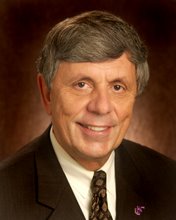
We continue again this week with my answers to the questions posed by leaders from across CHRISTUS Health at our recent leadership retreat.
Q. How would you succinctly define quality care?
A. In concise terms, I think a quality outcome has four metrics:
1. Morbidity and mortality
2. Functional status
3. Patient satisfaction
4. Adherence to best practices and evidenced –based clinical protocols
Q. I know you said if you had it to do over, you would do it all over again. But is there one thing that you might change?
A. Yes.I would have been a pediatric specialist instead of a general surgeon. When I was training they did not have pediatric specialty residencies, and I did not think I would be challenged enough as a general pediatrician. As a general surgeon in the early years, before there were pediatric surgeons, I operated also on children. I love all patients, but have a special place in my heart for children.
Q. What is the one thing that can minimize the toxic side-effects of change you talk about?
A. Besides identifying the potential toxic sides effects, I would say there are two keys to implementing long-term change:
1. Providing clear rationale of why the change is necessary
2. Breaking the change down into doable chunks. Sudden and overwhelming change can, as we have experienced, trigger fundamental survival instincts and build strong resistance. Effective leaders recognize this and move quickly to help followers regain a sense of balance and equilibrium.
Q. You are saying on your recent visits to the regions and business units that if CHRISTUS Health is going to reach excellence, the leaders need to feel “called” and then be able to do transformational work. What is your definition of transformational leadership?
A. When describing transformational leadership, I use the 8 steps outlined in the January 2007 edition of the Harvard Business Review. They are:
l. Establish a sense of urgency
2. Form a powerful guiding coalition
3. Create a clear vision
4. Communicate the vision
5. Empowers others to act on the vision
6. Plan and create short-term wins
7. Consolidate the improvements, often creating more change
8. Institutionalize the new approaches
Q. What is the one major obstacle standing in the way of obtaining excellence?
A. Not dealing with the people who are satisfied with “good.”
Wednesday, October 20, 2010

Burning Questions, Part II
As I mentioned in my last post, we recently gathered leaders from across CHRISTUS Health for a leadership retreat. In my opening presentation to these leaders, I asked them to submit questions for me, one of which was, “If this was your last chance to meet with me, what burning questions would you like to ask?”
Our leaders submitted over 90 different inquiries, of which I answered about 50 at a later session. Here are some additional submitted questions along with my answers.
Q. You described the characteristics of a successful health system in your opening presentation. As we move forward, what do you think needs to stay constant in CHRISTUS Health, and what do you think can change in the future?
A. Certainly our brand needs to remain as constant as possible, with each component being enhanced and strengthened in the next decade. Also, our 5 Strategic Directions and our 8 Strategic Enablers must remain. In addition, I would list 5 other behaviors that must remain constant:
l. We must put our patients’, families’, and residents’ needs and interest first and foremost.
2. We must always give caring and responsive service.
3. We must treat each other with courtesy and respect to maintain the excellent team focus that a successful heath system must have.
4. We must be stewards of the resources that our communities and CHRISTUS have entrusted to us.
5. We must devote significant organizational and personal resources to not only replenish our knowledge base, but also to reflect in small groups and in one-to-one encounters on how we might further improve. Successful organizations grow both in individual and organizational wisdom.
With that said, I think everything else is malleable. However, I believe the prerequisite for each change--and we know many will be required in the future--must be a serious attempt to improve our ability to do our work in meeting the needs of our patients, residents, families, and customers, and well as to structure our education and research mission to ensure high quality and low cost services in our present, and to predict the future and change its magnetic north to better health.
Q. What energizes you when you are tired or facing tough challenges?
A. I always pause and reflect on the successes we have accomplished as a family or a ministry. You have heard me say many times that you must celebrate the incremental victories to get the energy to overcome the obstacles you see ahead. And I always remember Babe Ruth’s hitting history……..He struck out 1,330 times in between his 714 home runs.
Q. What do you pray for most often?
A. For peace…personally, professionally, and in the world.
Q. What in CHRISTUS do you love most, and what will you miss the most?
A. The answer to both parts of the questions is the same……..YOU!
Q. What is your biggest achievement?
A. Personally…having a family. Professionally….becoming a physician and helping to heal many people along the way.
Q. What is the most important lesson that every leader should learn?
A. You must always be humble!
Our leaders submitted over 90 different inquiries, of which I answered about 50 at a later session. Here are some additional submitted questions along with my answers.
Q. You described the characteristics of a successful health system in your opening presentation. As we move forward, what do you think needs to stay constant in CHRISTUS Health, and what do you think can change in the future?
A. Certainly our brand needs to remain as constant as possible, with each component being enhanced and strengthened in the next decade. Also, our 5 Strategic Directions and our 8 Strategic Enablers must remain. In addition, I would list 5 other behaviors that must remain constant:
l. We must put our patients’, families’, and residents’ needs and interest first and foremost.
2. We must always give caring and responsive service.
3. We must treat each other with courtesy and respect to maintain the excellent team focus that a successful heath system must have.
4. We must be stewards of the resources that our communities and CHRISTUS have entrusted to us.
5. We must devote significant organizational and personal resources to not only replenish our knowledge base, but also to reflect in small groups and in one-to-one encounters on how we might further improve. Successful organizations grow both in individual and organizational wisdom.
With that said, I think everything else is malleable. However, I believe the prerequisite for each change--and we know many will be required in the future--must be a serious attempt to improve our ability to do our work in meeting the needs of our patients, residents, families, and customers, and well as to structure our education and research mission to ensure high quality and low cost services in our present, and to predict the future and change its magnetic north to better health.
Q. What energizes you when you are tired or facing tough challenges?
A. I always pause and reflect on the successes we have accomplished as a family or a ministry. You have heard me say many times that you must celebrate the incremental victories to get the energy to overcome the obstacles you see ahead. And I always remember Babe Ruth’s hitting history……..He struck out 1,330 times in between his 714 home runs.
Q. What do you pray for most often?
A. For peace…personally, professionally, and in the world.
Q. What in CHRISTUS do you love most, and what will you miss the most?
A. The answer to both parts of the questions is the same……..YOU!
Q. What is your biggest achievement?
A. Personally…having a family. Professionally….becoming a physician and helping to heal many people along the way.
Q. What is the most important lesson that every leader should learn?
A. You must always be humble!
Wednesday, October 13, 2010
Burning Questions, Part I
Last week, we gathered leaders from across CHRISTUS Health for a leadership retreat. In my opening presentation to these leaders, I asked them to submit questions for me, one of which was, “If this was your last chance to meet with me, what burning questions would you like to ask?”
Our leaders submitted over 90 different inquiries, of which I answered about 50 at a later session. Over the next few weeks, I will be answering many more via email with these leaders.
One question that was asked by many had to do with accountability, what it really means, how it is seen in action, and how it can be measured. Because this is such an important question and its answer is a critical success factor for the future of CHRISTUS, I shared with these leaders the 10 accountability items that I have looked for in my daily work for the last 44 years. They are:
l. Follow disciplined processes in getting work done
2. Feel ownership for the goals of the organization, region, business unit or program
3. Work to remove unnecessary bureaucracy
4. Drive out costs at every level
5. Eliminate redundancies
6. Meet commitments
7. Commit to quality and safety in all work activities
8. Accept responsibility for getting the work done
9. Provide and receive rewards, verbal as well as monetary, tied to meeting goals on time and within budget
10. Create and experience clear expectations for who has to do what to get the work done in an excellent manner
It is my hope that these 10 Accountability Items will be helpful for our leaders in reflecting on accountability and sharing their thoughts and expectations with their team members.
Our leaders submitted over 90 different inquiries, of which I answered about 50 at a later session. Over the next few weeks, I will be answering many more via email with these leaders.
One question that was asked by many had to do with accountability, what it really means, how it is seen in action, and how it can be measured. Because this is such an important question and its answer is a critical success factor for the future of CHRISTUS, I shared with these leaders the 10 accountability items that I have looked for in my daily work for the last 44 years. They are:
l. Follow disciplined processes in getting work done
2. Feel ownership for the goals of the organization, region, business unit or program
3. Work to remove unnecessary bureaucracy
4. Drive out costs at every level
5. Eliminate redundancies
6. Meet commitments
7. Commit to quality and safety in all work activities
8. Accept responsibility for getting the work done
9. Provide and receive rewards, verbal as well as monetary, tied to meeting goals on time and within budget
10. Create and experience clear expectations for who has to do what to get the work done in an excellent manner
It is my hope that these 10 Accountability Items will be helpful for our leaders in reflecting on accountability and sharing their thoughts and expectations with their team members.
Thursday, September 30, 2010
Five Ways Hospitals Will Change Over the Next 10 Years
I recently shared an article with our leaders from Becker’s Hospital Review entitled, ”5 Ways Hospitals will Change Over the Next 10 Years”.
I believe the information presented reaffirms what we have been saying, and supports the CHRISTUS vision, as well as our 5 Strategic Directions and 8 Enablers. In fact, I have blogged about all of the changes listed in this publication over the years. If you’d like to read more about how CHRISTUS is addressing these changes, I’ve provided links to these blog posts below.
5 Ways Hospitals will Change Over the Next 10 Years:
1. Hospitals will redesign their current processes rather than build new facilities. Blog post: Organizational Redesign
2. Physicians, RNs and physician extenders will do the work that fits their credentialing. Blog posts: Remembering the Human Touch and Health Care Reform: The Primary Care Crisis
3. Some hospitals will inevitably fail. Blog post: Competition and Collaboration
4. Hospitals will focus more energy on reducing readmissions. Blog posts: Catholic-Owned Health Care Systems Earn High Marks and CHRISTUS’ Changing Portfolio: 1/3 Non-Acute Care
5. Hospitals will have to focus more on disease prevention. Blog post: Health Care Reform: Wellness Programs and Prevention
I believe the information presented reaffirms what we have been saying, and supports the CHRISTUS vision, as well as our 5 Strategic Directions and 8 Enablers. In fact, I have blogged about all of the changes listed in this publication over the years. If you’d like to read more about how CHRISTUS is addressing these changes, I’ve provided links to these blog posts below.
5 Ways Hospitals will Change Over the Next 10 Years:
1. Hospitals will redesign their current processes rather than build new facilities. Blog post: Organizational Redesign
2. Physicians, RNs and physician extenders will do the work that fits their credentialing. Blog posts: Remembering the Human Touch and Health Care Reform: The Primary Care Crisis
3. Some hospitals will inevitably fail. Blog post: Competition and Collaboration
4. Hospitals will focus more energy on reducing readmissions. Blog posts: Catholic-Owned Health Care Systems Earn High Marks and CHRISTUS’ Changing Portfolio: 1/3 Non-Acute Care
5. Hospitals will have to focus more on disease prevention. Blog post: Health Care Reform: Wellness Programs and Prevention
Wednesday, September 22, 2010
Mental Health – An Important Part of Wellness
As we have now enhanced our focus on health and wellness as articulated in our current vision statement, it is imperative that our system, regional and business unit governance boards, in partnership with management, embrace, in a more focused way, the “Seven Determinants of Health.” These include:
• Primary outpatient locations that are convenient;
• Schools with quality teachers and educational processes;
• Preschool and after-school programs for working parents;
• Appropriate low cost housing;
• Appropriate nutrition;
• Appropriate psychological and psychiatric services;
• Right-sized hospitals with the appropriate acute care services.
Of all these services, those associated with psychological and psychiatric care have been significantly reduced over the last decade and are minimally available in most communities. This is highlighted in a recent article entitled, “The Forgotten Patients,” which appeared in the Sept. 13, 2010 edition of Forbes magazine. The article’s authors state that the “health industry ignores the 35,000 people a year who commit suicide.” This article also highlights the fluctuation of both mental health issues and suicide with age, gender and ethnicity, factors that we must take into account in our international ministry as the world continues to flatten. And finally, the article concludes by identifying some best practices, including proposed and ongoing research to address these challenges.
As the CHRISTUS Health family continues its Journey to Excellence, it will be necessary for us to develop processes to improve the mental health status of the communities we serve.
• Primary outpatient locations that are convenient;
• Schools with quality teachers and educational processes;
• Preschool and after-school programs for working parents;
• Appropriate low cost housing;
• Appropriate nutrition;
• Appropriate psychological and psychiatric services;
• Right-sized hospitals with the appropriate acute care services.
Of all these services, those associated with psychological and psychiatric care have been significantly reduced over the last decade and are minimally available in most communities. This is highlighted in a recent article entitled, “The Forgotten Patients,” which appeared in the Sept. 13, 2010 edition of Forbes magazine. The article’s authors state that the “health industry ignores the 35,000 people a year who commit suicide.” This article also highlights the fluctuation of both mental health issues and suicide with age, gender and ethnicity, factors that we must take into account in our international ministry as the world continues to flatten. And finally, the article concludes by identifying some best practices, including proposed and ongoing research to address these challenges.
As the CHRISTUS Health family continues its Journey to Excellence, it will be necessary for us to develop processes to improve the mental health status of the communities we serve.
Wednesday, September 15, 2010
Medicine’s Next Frontier: The Brain
In discussions about the future of medicine, I often say that we will understand the brain in the next 25 years as well as we understand the heart today, the majority of knowledge about which we gained just in the last 25 years.
Supporting my assertion was information in a recent article in The Dallas Morning News about a new center for brain research associated with the University of Texas at Dallas that opened this week. I still believe that only one-third of what we do in acute hospitals today will need to be done there in 10- 15 years, and our major surgeries will be in and around the brain. We will discover new ways to treat cancer metastasis and new operative techniques for Parkinsonian and Alzheimer diseases, as well as chronic senile dementia.
CHRISTUS’ new vision statement speaks of being and innovator and partner in health and wellness initiatives, and keeping current on the treatment recommendations coming out of this and other brain study centers will be key as we continue our Journey to Excellence, making sure we are involved in the product lines that will add both quality and quantity of life to the people we serve in our sacred ministry.
Supporting my assertion was information in a recent article in The Dallas Morning News about a new center for brain research associated with the University of Texas at Dallas that opened this week. I still believe that only one-third of what we do in acute hospitals today will need to be done there in 10- 15 years, and our major surgeries will be in and around the brain. We will discover new ways to treat cancer metastasis and new operative techniques for Parkinsonian and Alzheimer diseases, as well as chronic senile dementia.
CHRISTUS’ new vision statement speaks of being and innovator and partner in health and wellness initiatives, and keeping current on the treatment recommendations coming out of this and other brain study centers will be key as we continue our Journey to Excellence, making sure we are involved in the product lines that will add both quality and quantity of life to the people we serve in our sacred ministry.
Wednesday, September 8, 2010
A New Way of Thinking About Nonprofit Boards
As we regularly must make decisions about the future of CHRISTUS Health, we are familiar with the tension that some companies feel between “the board’s role” and “leadership’s role.” However, we have clearly defined these roles with a focus on “generative thinking” and have made it a part of our governance processes across the CHRISTUS system.
The greatest example of generative thinking in the CHRISTUS ministry is our future planning processes. Because we do that, it is much easier for leadership to follow through on implementation of plans without the need to return for more robust discussions with the board.
At CHRISTUS, we believe that with the SPA, our operational algorithm, and now our patient satisfaction algorithm, issues and challenges are clearly visible to all of us, including leadership and the board, which helps us to focus on the “generative questions”; for example, whether to stay in or exit a market. Clearly, this is not anything new to how excellent governance and leadership should interact, but it is a new way to express the need for robust, thoughtful and reflective discussions driven by a decision-making process.
Following are excerpts from a Website where one of the authors of the book “Governance as Leadership: Reframing the Work of Nonprofit Boards,” is interviewed:
Q: You introduce a mode of governance called "generative thinking." Can you give a brief overview of what this is, and why it is so essential to governance?
A: The most important work that takes place in an organization is when people first begin to identify and discern what the important challenges, problems, opportunities, and questions are. It's the way in which the intellectual agenda of the organization is constructed.
The generative work that we recommend encourages boards to be present at those times when the organization tries to make sense of circumstances, tries to make meaning of events.
The way in which we first make sense of circumstances is in fact what triggers or spawns strategies, policies, decisions, and actions. (We chose the word "generative" because its roots are in genesis.) Boards need to be there at the creation, when people say, "Okay—that's what we need to work on." Often, it's senior managers as leaders who come to a board and say, "We have looked at all the issues, here is the problem, here's what we plan to do. Does this solution sound right?" The question should be: "Do we have the problem right?"
When you think of a decision-making flow, all we are suggesting is that boards get at the headwaters. They need to get way upstream; they tend to wade in much too far downstream.
Generative thinking is getting to the question before the question. It's actually the fun part of governance. It's not about narrow technical expertise. Generative work is almost always about questions of values, beliefs, assumptions, and organizational cultures. That's what makes it interesting, but also what makes it important is to have people in those conversations who understand the institution, but have some degree of distance.
The greatest example of generative thinking in the CHRISTUS ministry is our future planning processes. Because we do that, it is much easier for leadership to follow through on implementation of plans without the need to return for more robust discussions with the board.
At CHRISTUS, we believe that with the SPA, our operational algorithm, and now our patient satisfaction algorithm, issues and challenges are clearly visible to all of us, including leadership and the board, which helps us to focus on the “generative questions”; for example, whether to stay in or exit a market. Clearly, this is not anything new to how excellent governance and leadership should interact, but it is a new way to express the need for robust, thoughtful and reflective discussions driven by a decision-making process.
Following are excerpts from a Website where one of the authors of the book “Governance as Leadership: Reframing the Work of Nonprofit Boards,” is interviewed:
Q: You introduce a mode of governance called "generative thinking." Can you give a brief overview of what this is, and why it is so essential to governance?
A: The most important work that takes place in an organization is when people first begin to identify and discern what the important challenges, problems, opportunities, and questions are. It's the way in which the intellectual agenda of the organization is constructed.
The generative work that we recommend encourages boards to be present at those times when the organization tries to make sense of circumstances, tries to make meaning of events.
The way in which we first make sense of circumstances is in fact what triggers or spawns strategies, policies, decisions, and actions. (We chose the word "generative" because its roots are in genesis.) Boards need to be there at the creation, when people say, "Okay—that's what we need to work on." Often, it's senior managers as leaders who come to a board and say, "We have looked at all the issues, here is the problem, here's what we plan to do. Does this solution sound right?" The question should be: "Do we have the problem right?"
When you think of a decision-making flow, all we are suggesting is that boards get at the headwaters. They need to get way upstream; they tend to wade in much too far downstream.
Generative thinking is getting to the question before the question. It's actually the fun part of governance. It's not about narrow technical expertise. Generative work is almost always about questions of values, beliefs, assumptions, and organizational cultures. That's what makes it interesting, but also what makes it important is to have people in those conversations who understand the institution, but have some degree of distance.
Subscribe to:
Posts (Atom)