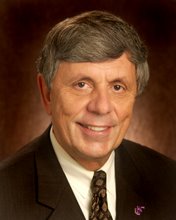
At this time of year, it is so important for each member of the CHRISTUS Family to pause and review all for which we should be thankful, both in our personal and professional lives. We are truly blessed in so many ways as we have been called to serve in this sacred ministry.
As we continue our Journey to Excellence, guided not only by our three strategic drivers, five strategic directions and eight strategic enablers, but also by any new directions that will be mandated by health care reform, it is clear we will need to continue to embrace new skills and competencies in our work.
Embracing change will be essential to supporting our continuing portfolio transitions to become one-third acute care in the U.S., one-third non-acute care in the U.S. and one-third international. New energies will be required to continuing to reach our goal of becoming one of the highest quality and low cost health care providers in the world. In light of our continuing need to change and grow, I thought it would be appropriate to share the “Reflection on Autumn Days” below. On behalf of the entire Senior Team, I extend our sincerest of thanks to every CHRISTUS Healer for all they do to serve in our ministry and to extend their hands to care for the multitude of sick and infirm.
Reflection on Autumn Days
By Joyce Rupp
A new season is moving in. We can sense its presence in the coolness of the breeze and the quick gusts of wind that wrap themselves around browning lawns and fading forest leaves. This time of transition belongs to more than just the earth. Inside of us there are also quiet changes sending us their signals to let go.
Trees of radiant green say goodbye to another year’s growth. Their leaves break away, sailing to the ground. They tell us that in the deepest part of who we are, there is always a call to continue our transformation process.
Across the land truckloads of harvested fruits, vegetables, and grains make their way to market. Gardens and fields give of their gifts. Growers fill their baskets and wagons. Sometimes it is only when produce is gathered or grain is caught into our wagons that the harvest is seen in its bounty. We, too, are meant to count our blessings even when the reaping at first looks sparse and lean.
Frost shakes the warmth out of autumn weather and shapes itself into the first hues of winter. We begrudgingly see the signs of future cold and emptiness, knowing full well that our hearts are not immune to this seasonal direction.
We wake up to misty mornings full of dampness, covered by clouds that hang low. Wetness rests on what remains of summer’s beauty and fog tried to hide the road before us. We walk once more into the mystery part of life, recognizing that the inner journey has its clouded, foggy pathways.
Color enriches autumn days with the last laughs of lovely marigolds and the visual flavors of rusted oaks and yellowed maples. A blessing called beauty kisses the sadness in their dying and makes of the ache a tender thing. When our own pain is great we look for beauty and know its soothing respite.
Geese are going south, as are all flocks of birds whose hearts lean toward the sun. They are in tune with the inside timing. We need that same gift of inner sensing so that we can be aware of our leaning toward the divine and follow what is being called forth in the depths of ourselves.
Beyond us, in distant places, there are other seasons of the earth and of the spirit. Wars with weapons are mixed with struggles of greed and power. Little children yearn to be fed and old people dream of days when there was peace enough for all.
We are autumn people. We are always called to be in the process of growing and changing. May our minds and hearts be open to this inner season which is a part of us. May we trust you, Autumn God, who calls us to grow. May we find hope as we enter willingly into the dying that is needed for our transformation.
Tuesday, November 24, 2009

Wednesday, November 18, 2009
Leadership at this Moment in Time: How to Lead an Organization through a Perfect Storm
I recently presented the keynote Donald Dunn Memorial lecture at the 31st Annual Iowa Healthcare Executive Symposium, which I want to share with you. My presentation, "Leadership at this Moment in Time: How to Lead an Organization through a Perfect Storm," was about the perfect storm health care in the U.S. has found itself in and how leaders can best react and respond to all the changes in our industry and on the horizon. It covers many subjects I have discussed previously on my blog about leadership and the current state of the health care industry.
I think it is important to close this presentation with a big thank you to each CHRISTUS Associate for the part they play in making this story our reality at this moment in time on our Journey to Excellence! These CHRISTUS Healers continue to make me extremely proud to be on their team as I continue to reflect on the awesome responsibility of leadership in this sacred ministry.
Leadership Through the Perfect Storm
View more presentations from CHRISTUS Health.
I think it is important to close this presentation with a big thank you to each CHRISTUS Associate for the part they play in making this story our reality at this moment in time on our Journey to Excellence! These CHRISTUS Healers continue to make me extremely proud to be on their team as I continue to reflect on the awesome responsibility of leadership in this sacred ministry.
Wednesday, November 11, 2009
CHRISTUS Health Supports National Health Reform Efforts
In the Gospel of John, chapter 10 verse 10, when Jesus is describing himself as the good shepherd, he speaks about how he protects his sheep (which we interpret to be the people he has created and loves). He said, “I came so that they might have life and have it more abundantly.”
It is no secret that the 46 million uninsured Americans live sicker lives and die younger than those with insurance coverage. An estimated 18,000 - 22,000 Americans die each year because they don't have health coverage, according to studies conducted by the Institute of Medicine and the Urban Institute. This is far from an abundant life, and we are concerned that the number of uninsured Americans is rising, as we see a rise in the amount of charity care we’ve provided over the last year.
We will of course always provide community benefit and charity care, as it is CHRISTUS’ mission to extend the healing ministry of Jesus Christ. But we know that this is not the best or most cost-effective way for Americans to receive care. We want to ensure that our community members have access to high-quality care in medical homes that can better manage ongoing conditions and chronic disease than our Emergency Departments can.
This is why CHRISTUS Health supports the health reform efforts currently taking place in Congress. We agree with Sr. Carol Keehan, president and CEO of the Catholic Health Association, who after the U.S. House of Representatives passed the Affordable Health Care for America Act (H.R. 3962), said that, “There is no perfect bill, nor will there be, but the leaders in the House of Representatives have crafted a good health reform bill that gets this nation a step closer to the health care system the American people deserve and can be proud of.”
We cannot let the perfect be the enemy of the good, and while there is not a perfect reform bill, the time to act is now. This is why we have been blogging about health reform and visiting legislators, regulators, thought leaders and advocates to tell the CHRISTUS story. We have been honest with them about the concessions we are willing to make and the additional approaches we would like to see in a final bill.
One of those is medical liability reform (often called “tort reform”). In 2003, the Texas legislature passed sweeping medical liability reform legislation. For CHRISTUS Health, the impact was immediate and enormous. In 2004, the CHRISTUS system had budgeted $14.5 million to cover liability insurance. Instead, we were able to reduce that annual charge by nearly $10 million. Since then, we continue to see equally impressive savings, allowing us to reduce charges to our health care centers for their self-insured and excess medical malpractice coverage. Our communities benefit because we are able to reinvest a good portion of those savings in safety and risk reduction programs.
Medical liability reform on a national scale would reduce medical malpractice insurance fees and also decrease overuse of many lab and radiology testing services while still providing patients who are injured by negligent medical care with the right to full recovery for their economic damages. Medical liability reform that does not supersede those already enacted by some states should be included in Federal health reform efforts.
So when a member of the staff of Texas Governor Rick Perry called to discuss our tort reform experience, I gladly talked with him about the savings we have seen and how we have reinvested them in programs to keep our patients safer during their stays in our facilities.
Many of you have probably seen the editorial in The Washington Post written by Gov. Perry and Newt Gingrich, former Speaker of the House of Representatives, expressing their views on national health reform and their position that states should be allowed to lead the way. They point to CHRISTUS’ savings from medical liability reform as a statewide approach to controlling health care costs.
It is true that CHRISTUS has benefitted from the medical liability reforms passed by the Texas Legislature, that we appreciate the mention in this editorial are always happy to work with Gov. Perry. However, I want to make clear that we do not share the views on national health reform that were expressed in the editorial.
Instead, we believe that health reform on a national scale that meets our Putting Care Within Reach® goals should be passed as soon as possible. While we know that this reform will not be a perfect, immediate, or eternal fix, we believe the time is now to take these large and important steps forward.
It is no secret that the 46 million uninsured Americans live sicker lives and die younger than those with insurance coverage. An estimated 18,000 - 22,000 Americans die each year because they don't have health coverage, according to studies conducted by the Institute of Medicine and the Urban Institute. This is far from an abundant life, and we are concerned that the number of uninsured Americans is rising, as we see a rise in the amount of charity care we’ve provided over the last year.
We will of course always provide community benefit and charity care, as it is CHRISTUS’ mission to extend the healing ministry of Jesus Christ. But we know that this is not the best or most cost-effective way for Americans to receive care. We want to ensure that our community members have access to high-quality care in medical homes that can better manage ongoing conditions and chronic disease than our Emergency Departments can.
This is why CHRISTUS Health supports the health reform efforts currently taking place in Congress. We agree with Sr. Carol Keehan, president and CEO of the Catholic Health Association, who after the U.S. House of Representatives passed the Affordable Health Care for America Act (H.R. 3962), said that, “There is no perfect bill, nor will there be, but the leaders in the House of Representatives have crafted a good health reform bill that gets this nation a step closer to the health care system the American people deserve and can be proud of.”
We cannot let the perfect be the enemy of the good, and while there is not a perfect reform bill, the time to act is now. This is why we have been blogging about health reform and visiting legislators, regulators, thought leaders and advocates to tell the CHRISTUS story. We have been honest with them about the concessions we are willing to make and the additional approaches we would like to see in a final bill.
One of those is medical liability reform (often called “tort reform”). In 2003, the Texas legislature passed sweeping medical liability reform legislation. For CHRISTUS Health, the impact was immediate and enormous. In 2004, the CHRISTUS system had budgeted $14.5 million to cover liability insurance. Instead, we were able to reduce that annual charge by nearly $10 million. Since then, we continue to see equally impressive savings, allowing us to reduce charges to our health care centers for their self-insured and excess medical malpractice coverage. Our communities benefit because we are able to reinvest a good portion of those savings in safety and risk reduction programs.
Medical liability reform on a national scale would reduce medical malpractice insurance fees and also decrease overuse of many lab and radiology testing services while still providing patients who are injured by negligent medical care with the right to full recovery for their economic damages. Medical liability reform that does not supersede those already enacted by some states should be included in Federal health reform efforts.
So when a member of the staff of Texas Governor Rick Perry called to discuss our tort reform experience, I gladly talked with him about the savings we have seen and how we have reinvested them in programs to keep our patients safer during their stays in our facilities.
Many of you have probably seen the editorial in The Washington Post written by Gov. Perry and Newt Gingrich, former Speaker of the House of Representatives, expressing their views on national health reform and their position that states should be allowed to lead the way. They point to CHRISTUS’ savings from medical liability reform as a statewide approach to controlling health care costs.
It is true that CHRISTUS has benefitted from the medical liability reforms passed by the Texas Legislature, that we appreciate the mention in this editorial are always happy to work with Gov. Perry. However, I want to make clear that we do not share the views on national health reform that were expressed in the editorial.
Instead, we believe that health reform on a national scale that meets our Putting Care Within Reach® goals should be passed as soon as possible. While we know that this reform will not be a perfect, immediate, or eternal fix, we believe the time is now to take these large and important steps forward.
Wednesday, November 4, 2009
Leading CHRISTUS in the New Economic Environment, Part 2
In last week’s post, I discussed my interview with two representatives from IBM who asked to hear my thoughts for their 2010 Global CEO study entitled, “Leading in the New Economic Environment.” Many of their questions dealt with change and the external forces that CHRISTUS has been forced to respond to in order to remain successful and continue fulfilling our mission of extending the healing ministry of Jesus Christ.
But they also wanted to know about the internal systems and resources that must be in place for us to navigate the changing waters of the new economic environment.
They wanted to know which characteristics in our leaders are uniquely important in the health care industry. I named
• Compassion first, because decisions must be made with patients and their families at the forefront;
• Excellence, since our patients come into our facilities and turn their lives over to us every day, therefore we believe that excellence is a necessity, not a luxury and
• Optimism.
In fact, I believe that leadership and holding our leaders accountable will be some of the most crucial capabilities CHRISTUS will need in the next five years to execute our strategic plans and meet future opportunities successfully, and these leaders will need a whole new set of competencies that we didn’t need 10 - 15 years ago.
As an example, because of the recent instability in worldwide financial markets, I have had to become increasingly savvy in the treasury function of our operations. Our bond financers now expect us to basically perform as a for-profit, and in order to refinance our bonds, I am asked to talk to investors. They want to know that I have the knowledge to make things go well, and are no longer content with hearing solely from our CFO.
I say repeatedly that where we are successful in CHRISTUS, it is because we have the right leaders and teams in the right place, and where we are not successful, it is because we do not have the right leaders and teams in place. It has little to do with our assets, the age of our buildings, or anything else. Success starts with leadership, and our experiences in the economic climate of the last 12 months has taught us that we must continue to develop leaders with the capacity to change. (Earlier this year, I blogged on what leaders must do/change in challenging economic times. If you’re interested in reading that post, it’s located here.)
Our experience over the last year has also taught us that in the future, we will have to look at new and innovative ways to communicate with both internal and external stakeholders. Times of instability remind us once again that if there is a communication gap, it will get filled. (And usually it is filled with rumors fueled by fear.) We know that CHRISTUS is well positioned to meet future challenges because of our extensive future and strategic planning, but we have less time to execute these plans because of the health reform that now seems imminent in the U.S.
We have also learned that we will need to continue to enhance our intense focus on metrics. Without metrics, you can’t hold people accountable. We must continue to focus on a few critical success metrics and communicate upfront what’s expected of people if we are to attain them. In addition, these metrics must interconnect. Our Journey to Excellence sets out a path for us to achieve high quality in our 4 directions (clinical quality, service delivery, business literacy and community value), but we’ve learned that we must improve in all those areas in a parallel fashion, as they don’t operate in a vacuum, but together form one complete picture. And we know that this is possible, as we have just finished our best financial quarter in 11 years. We will continue to rely on our balanced scorecard and Strategic Portfolio Analysis (SPA) algorithm to help us track and report on these metrics.
But they also wanted to know about the internal systems and resources that must be in place for us to navigate the changing waters of the new economic environment.
They wanted to know which characteristics in our leaders are uniquely important in the health care industry. I named
• Compassion first, because decisions must be made with patients and their families at the forefront;
• Excellence, since our patients come into our facilities and turn their lives over to us every day, therefore we believe that excellence is a necessity, not a luxury and
• Optimism.
In fact, I believe that leadership and holding our leaders accountable will be some of the most crucial capabilities CHRISTUS will need in the next five years to execute our strategic plans and meet future opportunities successfully, and these leaders will need a whole new set of competencies that we didn’t need 10 - 15 years ago.
As an example, because of the recent instability in worldwide financial markets, I have had to become increasingly savvy in the treasury function of our operations. Our bond financers now expect us to basically perform as a for-profit, and in order to refinance our bonds, I am asked to talk to investors. They want to know that I have the knowledge to make things go well, and are no longer content with hearing solely from our CFO.
I say repeatedly that where we are successful in CHRISTUS, it is because we have the right leaders and teams in the right place, and where we are not successful, it is because we do not have the right leaders and teams in place. It has little to do with our assets, the age of our buildings, or anything else. Success starts with leadership, and our experiences in the economic climate of the last 12 months has taught us that we must continue to develop leaders with the capacity to change. (Earlier this year, I blogged on what leaders must do/change in challenging economic times. If you’re interested in reading that post, it’s located here.)
Our experience over the last year has also taught us that in the future, we will have to look at new and innovative ways to communicate with both internal and external stakeholders. Times of instability remind us once again that if there is a communication gap, it will get filled. (And usually it is filled with rumors fueled by fear.) We know that CHRISTUS is well positioned to meet future challenges because of our extensive future and strategic planning, but we have less time to execute these plans because of the health reform that now seems imminent in the U.S.
We have also learned that we will need to continue to enhance our intense focus on metrics. Without metrics, you can’t hold people accountable. We must continue to focus on a few critical success metrics and communicate upfront what’s expected of people if we are to attain them. In addition, these metrics must interconnect. Our Journey to Excellence sets out a path for us to achieve high quality in our 4 directions (clinical quality, service delivery, business literacy and community value), but we’ve learned that we must improve in all those areas in a parallel fashion, as they don’t operate in a vacuum, but together form one complete picture. And we know that this is possible, as we have just finished our best financial quarter in 11 years. We will continue to rely on our balanced scorecard and Strategic Portfolio Analysis (SPA) algorithm to help us track and report on these metrics.
Wednesday, October 28, 2009
Leading CHRISTUS in the New Economic Environment, Part 1
Early this week, I met with two representatives from IBM who asked to hear my thoughts for their 2010 Global CEO study entitled, “Leading in the New Economic Environment.” IBM publishes a CEO report every two years, and interviews 1,200 CEOs across the world regarding how they will lead into the future. This is useful for IBM, as it also provides them with a chance to survey their audience about the directions they will be headed, since IBM has evolved over time from a technology-driven business to a focus on business process and “helping businesses solve the big problems of the day.”
One of the first questions they asked was, “What are the three most important external forces that will impact your organization over the next three years?” I was able to choose from a list they provided, and identified:
1. Regulatory concerns. The change brought to our industry by health care reform will be revolutionary. I still think this is a great time to be in health care, though. I often say that the “good old days” really weren’t that good. We’re able to treat so many more diseases because of advances in medicine and technology than when I was a med student. Granted, these days may not be easier, but they are much more rewarding, and require that we truly must figure out how to be the high quality, low-cost providers in our communities. Ten years ago, you could sleep in your office and make money because Medicare reimbursement was so high. Today, though, only the high quality/low cost providers will be able to prove their value to consumers and survive.
2. Technological factors. CHRISTUS has a commitment to incorporate small technologies (technology that is owned by most people) into every day care. We know that it is possible for diabetics to take a blood sugar reading by feeding a blood sample into their cell phone, which can read it and then send the results to their physician. We also know that tools are being developed for and in use at our Senior campuses like toilet seats that send messages to remote caregivers if the toilet has not been sat on or shoes that send similar messages if they have not been put on. These signs let us know that a Senior in our care has not gotten out of bed, and may need help. All of these tools help us as we move from “health care” to “health.”
3. Globalization. Because of the regulatory environment in Mexico, we operate there as a for-profit and reinvest our profits in our clinics for the poor in rural areas of Mexico. We are now the second largest for-profit health system in Mexico, and are exploring opportunities to expand into Panama and Peru. I really do believe that 10 to 15 percent of the health care solution in the U.S. will be provided by medical travel to Mexico. And we expect the current number of 1 million American expats in Mexico to grow because of our recent recession that undoubtedly affected many retirement funds.
We have worked hard over our history to manage change, which has positioned us well to meet the challenges and opportunities of the future. We have expanded into Mexico; systematized many key functions like our supply chain and home care activities; made future planning a key focus of our organization and are currently reorganizing our portfolio from an emphasis on acute care to 1/3 acute care, 1/3 non-acute care and 1/3 international facilities.
Innovation is a key part of our future planning strategy. This is why we have created and sponsored two Futures Task Forces in our 10-year history as CHRISTUS, and why we founded the CHRISTUS Innovations Institute. We have partnered to systematize our supply chain, extend care to the poor in Mexico and provide psychiatric services at Our Daily Bread in Galveston, Texas, which provides support services to homeless men, women and children.
The folks from IBM who visited with me this week had many more questions about CHRISTUS and our future--too many to fit into one blog post. Therefore, I plan to revisit some of their additional questions in next week’s post as well.
One of the first questions they asked was, “What are the three most important external forces that will impact your organization over the next three years?” I was able to choose from a list they provided, and identified:
1. Regulatory concerns. The change brought to our industry by health care reform will be revolutionary. I still think this is a great time to be in health care, though. I often say that the “good old days” really weren’t that good. We’re able to treat so many more diseases because of advances in medicine and technology than when I was a med student. Granted, these days may not be easier, but they are much more rewarding, and require that we truly must figure out how to be the high quality, low-cost providers in our communities. Ten years ago, you could sleep in your office and make money because Medicare reimbursement was so high. Today, though, only the high quality/low cost providers will be able to prove their value to consumers and survive.
2. Technological factors. CHRISTUS has a commitment to incorporate small technologies (technology that is owned by most people) into every day care. We know that it is possible for diabetics to take a blood sugar reading by feeding a blood sample into their cell phone, which can read it and then send the results to their physician. We also know that tools are being developed for and in use at our Senior campuses like toilet seats that send messages to remote caregivers if the toilet has not been sat on or shoes that send similar messages if they have not been put on. These signs let us know that a Senior in our care has not gotten out of bed, and may need help. All of these tools help us as we move from “health care” to “health.”
3. Globalization. Because of the regulatory environment in Mexico, we operate there as a for-profit and reinvest our profits in our clinics for the poor in rural areas of Mexico. We are now the second largest for-profit health system in Mexico, and are exploring opportunities to expand into Panama and Peru. I really do believe that 10 to 15 percent of the health care solution in the U.S. will be provided by medical travel to Mexico. And we expect the current number of 1 million American expats in Mexico to grow because of our recent recession that undoubtedly affected many retirement funds.
We have worked hard over our history to manage change, which has positioned us well to meet the challenges and opportunities of the future. We have expanded into Mexico; systematized many key functions like our supply chain and home care activities; made future planning a key focus of our organization and are currently reorganizing our portfolio from an emphasis on acute care to 1/3 acute care, 1/3 non-acute care and 1/3 international facilities.
Innovation is a key part of our future planning strategy. This is why we have created and sponsored two Futures Task Forces in our 10-year history as CHRISTUS, and why we founded the CHRISTUS Innovations Institute. We have partnered to systematize our supply chain, extend care to the poor in Mexico and provide psychiatric services at Our Daily Bread in Galveston, Texas, which provides support services to homeless men, women and children.
The folks from IBM who visited with me this week had many more questions about CHRISTUS and our future--too many to fit into one blog post. Therefore, I plan to revisit some of their additional questions in next week’s post as well.
Wednesday, October 21, 2009
The Cost of Care, Part 5 of 5
The fifth and final section of the Dallas Morning News’ series called “The Cost of Care” featured the approach of Scott & White Healthcare (sometimes called “The Mayo of Texas”) to collaboration instead of competition, examined why primary care physicians may be choosing to move to other models of care delivery and what the U.S. can learn from other countries’ health systems. You can access the series here.
The first article in the final section of the series reports on Dr. Bill Walton’s final day in his 31-year-old popular family practice in Dallas. Walton is moving to Temple, Texas to join Scott & White as a salaried physician because of the pressures and costs of running his solo practice, also known as the “business of medicine.”
The Newsexamines why primary care doctors are “becoming an endangered species.” I have addressed this problem on my blog numerous times. If you are interested in some of my thoughts, you can hear them here. It is clear that the trials and tribulations of primary care doctors must be addressed if we are to provide adequate care to Americans, and especially if larger numbers of them will have insurance coverage in the near future.
The second article provides an in-depth look at the strengths and weaknesses of Scott & White, which is an accountable care organization (ACO) that uses salaried doctors and a team approach to deliver high quality care at a low cost. The company controls costs by managing all aspects of medical care, including health insurance, outpatient clinics and hospice centers. ACOs received quite a bit of attention this summer, as some health care reform proponents suggested them as a way to reward physicians for the quality of care they provide, instead of the amount of procedures they perform. We supported including a Super MEDPAC or Super IMAC if the organization had the power to evaluate ACO and cost-saving projects and suggest them on a large scale instead of having only the power to cut Medicare reimbursement rates.
Jim Landers, a columnist for The Dallas Morning News, also wrote a short column to round out this series that examined the health care systems of other developed countries around the world. None of them are perfect, he concludes, but many have found ways to spend less for equal or better care than that provided in the U.S. I have spent some time comparing our system to that of Great Britain and Canada as well. Like the U.S. health system, each has its own strengths and weaknesses.
My thanks to The Dallas Morning News for its in-depth and informative coverage of the health care industry in Dallas. Surely there was much more to discuss, but their staff did a wonderful job getting straight to the heart of the matter.
The first article in the final section of the series reports on Dr. Bill Walton’s final day in his 31-year-old popular family practice in Dallas. Walton is moving to Temple, Texas to join Scott & White as a salaried physician because of the pressures and costs of running his solo practice, also known as the “business of medicine.”
The Newsexamines why primary care doctors are “becoming an endangered species.” I have addressed this problem on my blog numerous times. If you are interested in some of my thoughts, you can hear them here. It is clear that the trials and tribulations of primary care doctors must be addressed if we are to provide adequate care to Americans, and especially if larger numbers of them will have insurance coverage in the near future.
The second article provides an in-depth look at the strengths and weaknesses of Scott & White, which is an accountable care organization (ACO) that uses salaried doctors and a team approach to deliver high quality care at a low cost. The company controls costs by managing all aspects of medical care, including health insurance, outpatient clinics and hospice centers. ACOs received quite a bit of attention this summer, as some health care reform proponents suggested them as a way to reward physicians for the quality of care they provide, instead of the amount of procedures they perform. We supported including a Super MEDPAC or Super IMAC if the organization had the power to evaluate ACO and cost-saving projects and suggest them on a large scale instead of having only the power to cut Medicare reimbursement rates.
Jim Landers, a columnist for The Dallas Morning News, also wrote a short column to round out this series that examined the health care systems of other developed countries around the world. None of them are perfect, he concludes, but many have found ways to spend less for equal or better care than that provided in the U.S. I have spent some time comparing our system to that of Great Britain and Canada as well. Like the U.S. health system, each has its own strengths and weaknesses.
My thanks to The Dallas Morning News for its in-depth and informative coverage of the health care industry in Dallas. Surely there was much more to discuss, but their staff did a wonderful job getting straight to the heart of the matter.
Wednesday, October 14, 2009
The Cost of Care, Part 4
The fourth part of the Dallas Morning News’ five part series called “The Cost of Care” covered home health agencies in Texas and the soaring amount of spending on home health care in the state. You can access the series here.
The article once again aims to examine the fine line between the need for home health agencies and the great services they provide and the abuses of the system and its patients, which can account for a part of the huge increase in costs. It also points to decreases in Medicaid reimbursement rates that some have suggested as a solution to these abuses.
It seems unwise to cut reimbursement across the board for a very necessary service that does much good for patients in order to end some abuses to the system, especially because home care can, in many instances, decrease the cost of care since patients can be treated outside the hospital. Perhaps Texas should re-examine instituting a certificate of need statute as one possible part of the solution.
CHRISTUS HomeCare services are available in Texas, Louisiana and Utah, and we are continuing to invest in those necessary programs. I have blogged before about how we have been realigning our portfolio from its heavy focus on acute care to include one-third non-acute care and one-third international operations because of the trends we’re seeing in our industry and the culture worldwide.
In fact, we continue to believe that advances in technology like remote monitoring devices may make home care services less costly and more effective in the future. They are already assisting us in provide high quality home care today.
Yes, home health care is an important part of the CHRISTUS ministry, and therefore we believe it should remain an important part of the health care fabric in our country.
The article once again aims to examine the fine line between the need for home health agencies and the great services they provide and the abuses of the system and its patients, which can account for a part of the huge increase in costs. It also points to decreases in Medicaid reimbursement rates that some have suggested as a solution to these abuses.
It seems unwise to cut reimbursement across the board for a very necessary service that does much good for patients in order to end some abuses to the system, especially because home care can, in many instances, decrease the cost of care since patients can be treated outside the hospital. Perhaps Texas should re-examine instituting a certificate of need statute as one possible part of the solution.
CHRISTUS HomeCare services are available in Texas, Louisiana and Utah, and we are continuing to invest in those necessary programs. I have blogged before about how we have been realigning our portfolio from its heavy focus on acute care to include one-third non-acute care and one-third international operations because of the trends we’re seeing in our industry and the culture worldwide.
In fact, we continue to believe that advances in technology like remote monitoring devices may make home care services less costly and more effective in the future. They are already assisting us in provide high quality home care today.
Yes, home health care is an important part of the CHRISTUS ministry, and therefore we believe it should remain an important part of the health care fabric in our country.
Subscribe to:
Posts (Atom)