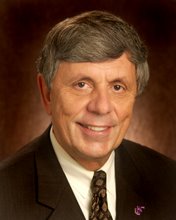
As we approach another Thanksgiving Day in the U.S., it is appropriate to pause and give thanks for the many blessings in our lives. I am thankful of course for my family and friends, but also for the wonderful CHRISTUS Associates, volunteers and physicians who provide excellent care to our patients, residents, consumers, and their families every day. It truly takes a sacred calling to work in health care, and I am thankful that each of you were called to travel with us on our Journey to Excellence.
Thanks to each CHRISTUS Associate, my colleagues, and readers of this blog. May this holiday season be filled with joy, peace, and happiness for each and every one of you.
Tuesday, November 23, 2010

Wednesday, November 17, 2010
Patient Satisfaction: My Continuing Focus
Patient satisfaction has been one of our main areas of focus since CHRISTUS was formed in 1999. As we have moved through this journey to ensure that our care is compassionate as well as excellent in clinical quality, we have seen other health systems take note of the importance of patient satisfaction, especially with the national HCAHPS survey.
When I have confronted physicians and Associates over the years with what I recognized as very poor performance in delivering kind, compassionate and highly-satisfying care to their patients, I often heard the response, “I am here to save lives, not make friends.” It is interesting to me, as I have been reflecting on our performance in patient satisfaction even more intensely in my transition period, that I came across an article that explains why those points are moot. “Patient Satisfaction is Here to Stay,” an article in the November 2010 edition of Emergency Physicians Monthly, also articulates in its closing paragraphs the need to combine our satisfaction focus with other areas we have included on our balanced scorecard to determine how “good” we really are.
It is clear that we are on this Journey to Excellence for the patients who turn over their most precious gift to us, their lives. We cannot violate this trust. We must be here to both “save lives” AND “make friends.”
Wednesday, November 10, 2010
Burning Questions, Part V
This week, I’ll be providing the final installment of my answers to the questions posed by leaders from across CHRISTUS Health at our recent leadership retreat.
Q. You mentioned that physician integration, seeing physicians as our partners and not customers or competitors, will be essential for our future success. Do we have strategies in place to make that happen?
A. Under the leadership of our Chief Medical Officer, and assisted by many team members, a myriad of physician integration strategies have been developed, and some are being implemented. Two important ones are the expansion of the employed physician model, now through our CHRISTUS Provider Network, and the development of evidenced-based clinical protocols which will be systematized.
Q. Should our growth be predominately out of the hurricane belt?
A. Although I believe we will explore every “call” that comes to us, our due diligence process will indicate that perhaps some of the best opportunities where we can expand our ministries will not be in locations prone to hurricanes. We have done that with our growth in San Antonio, both clinically and for our information systems, and in New Mexico.
Q. Do you believe there is a difference in a faith-based health system versus a non-faith based one?
A. Based on my experience in the three prior heath systems where I served, I am absolutely sure and have experienced a different ambiance in CHRISTUS Health. It has been much easier here to work with a balanced scorecard, making sure the decisions we have made were not driven primarily by a financial mindset. In addition the ability to routinely reflect and pray in preparations for meetings and events, as well as, with patients, sets us clearly apart. And finally, embracing the incarnational spirituality of our founding congregations gives us the ability to live out the golden rule every day, which should be the basis for all heath care quality and safety. In the end, if the care we render is not good enough for our Associates and their families, it is not good enough for anyone else who enters our doors! It is just that simple!
Q. Is there a role for young leaders in CHRISTUS Health?
A. Clearly the answer is a resounding YES! In the enhancement of our diversity program, we not only must be concerned about ethnic and gender diversity, but also talent and age diversity. The diversity of leadership has been a driver to determine participants in our coaching and mentoring programs, our leadership development classes, and our succession planning initiatives. Having younger and better prepared leaders coming behind you should be a goal for all of us as we continue our professional journey!
Q. What metrics did you use to plan a smooth and seamless transition?
A. To assure a smooth transition, the key is to plan as far in advance as possible. Abrupt changes in leadership are disruptive, even when they are done for appropriate reasons. Also, be totally transparent in explaining to all audiences the reasons for the transition. And finally, planning the transition when things are going well is most helpful, so your successor can assume the leadership responsibilities on a firm foundation, rather than meeting daily unknown surprises.
Wednesday, November 3, 2010
Burning Questions, Part IV
We continue again this week with my answers to the questions posed by leaders from across CHRISTUS Health at our recent leadership retreat.
Q. What is the direction you see for our international partnerships?
A. CHRISTUS Muguerza has many opportunities to grow in Mexico. And as capital in that country becomes more widely available, I am sure they will continue to explore and undertake opportunities to expand. We have become more culturally competent through this relationship, and CHRISTUS Muguerza is a much stronger ministry because we are partners in extending Jesus’ healing ministry. One of our sponsoring congregations, the Sisters of Charity of the Incarnate Word of San Antonio, is most interested in us investigating an expansion into Peru to work with their health care ministries there, which include clinics, visiting home nurses, a prenatal program, and inpatient and outpatient hospice programs. Our other sponsoring congregation, the Sisters of Charity of the Incarnate Word of Houston, recently asked for our assistance in the strategic planning process for their ministries in Guatemala. Through these opportunities, we are examining many possible future partnerships and directions.
Q. Can CHRISTUS Health develop successful ACOs?
A. The question is not “can we”, but “how” and “when will we.” Although we know the future will present challenges, we also know that we have all the pieces and are gaining the knowledge to put the puzzle together that will make us successful long into the future, regardless of heath care reform or not. Our abilities are undergirded by our 5 Strategic Directions and our 8 Strategic Enablers. We will do what we need to do to continue on the journey to put care within reach of all who need it.
Q. Has CHISTUS Muguerza fulfilled my expectation?
A. Clearly what had been accomplished in CHRISTUS Muguerza, expanding from 2 to 7 hospitals, multiple clinics, and ambulance service, a drug and addition center, a behavioral services facility, rehab facilities, and a network of clinics for the poor, has far exceed my expectations and vision for our international operations when we began that partnership in 2001. The team their embraced the CHRISTUS brand from day one, and quickly made the decision to join us on the Journey to Excellence.
Q. How do you move people out of silo thinking?
A. The ability to get every member of the CHRISTUS family thinking about how to horizontally integrate rather than to vertically report and think will be a critical success factor for our ministry. Clearly, we need to continue to explain the rationale of why this mode of operations is critical, and expand processes like matrix planning to force multiple constituencies to come together to plan a coordinated approach. And finally, integrated behaviors have to be incorporated into the performance planning processes, with clear expectation and identifiable rewards for accomplishing such.
Tuesday, November 2, 2010
A continued prayer for Haiti
I asked our communication teams around the CHRISTUS system to send the following message from me to all our Associates. Although we have not scheduled any future medical assistance trips to Haiti, we join with Associates, physicians, volunteers, patients, residents and friends around the CHRISTUS system to pray for support, comfort, and safety for our brothers and sisters in Haiti.
The chances are pretty good that tropical storm Tomas will strengthened and impact Haiti. Unfortunately, Haiti is slow in recovering from the earthquake, and the tent cities are much the same as when the CHRISTUS Team was there in February. In addition, a cholera epidemic is spreading, already having killed over 300 people. The relatives of the two girls from Haiti we are treating at CHRISTUS Santa Rosa Children’s Hospital are living within 4 poles covered by a blue tarp in one of these temporary housing compounds. If these flood, which is very likely, the results will be devastating to people have already suffered much and who we came to love while carrying out the healing ministry there. Sources on the ground indicate that the previous sources of international commitments are gone. I would ask each of you, on behalf of our original Haiti Task Force who planned our Mission, and the team that traveled their on your behalf, to keep all the Haitian people in your prayers as the storms pass over them. We, the CHRISTUS Family, know far better than most just what devastation these storms can cause. Hopefully, with our prayers, some sunshine will come forth from the clouds!
The chances are pretty good that tropical storm Tomas will strengthened and impact Haiti. Unfortunately, Haiti is slow in recovering from the earthquake, and the tent cities are much the same as when the CHRISTUS Team was there in February. In addition, a cholera epidemic is spreading, already having killed over 300 people. The relatives of the two girls from Haiti we are treating at CHRISTUS Santa Rosa Children’s Hospital are living within 4 poles covered by a blue tarp in one of these temporary housing compounds. If these flood, which is very likely, the results will be devastating to people have already suffered much and who we came to love while carrying out the healing ministry there. Sources on the ground indicate that the previous sources of international commitments are gone. I would ask each of you, on behalf of our original Haiti Task Force who planned our Mission, and the team that traveled their on your behalf, to keep all the Haitian people in your prayers as the storms pass over them. We, the CHRISTUS Family, know far better than most just what devastation these storms can cause. Hopefully, with our prayers, some sunshine will come forth from the clouds!
Wednesday, October 20, 2010
Burning Questions, Part III
We continue again this week with my answers to the questions posed by leaders from across CHRISTUS Health at our recent leadership retreat.
Q. How would you succinctly define quality care?
A. In concise terms, I think a quality outcome has four metrics:
1. Morbidity and mortality
2. Functional status
3. Patient satisfaction
4. Adherence to best practices and evidenced –based clinical protocols
Q. I know you said if you had it to do over, you would do it all over again. But is there one thing that you might change?
A. Yes.I would have been a pediatric specialist instead of a general surgeon. When I was training they did not have pediatric specialty residencies, and I did not think I would be challenged enough as a general pediatrician. As a general surgeon in the early years, before there were pediatric surgeons, I operated also on children. I love all patients, but have a special place in my heart for children.
Q. What is the one thing that can minimize the toxic side-effects of change you talk about?
A. Besides identifying the potential toxic sides effects, I would say there are two keys to implementing long-term change:
1. Providing clear rationale of why the change is necessary
2. Breaking the change down into doable chunks. Sudden and overwhelming change can, as we have experienced, trigger fundamental survival instincts and build strong resistance. Effective leaders recognize this and move quickly to help followers regain a sense of balance and equilibrium.
Q. You are saying on your recent visits to the regions and business units that if CHRISTUS Health is going to reach excellence, the leaders need to feel “called” and then be able to do transformational work. What is your definition of transformational leadership?
A. When describing transformational leadership, I use the 8 steps outlined in the January 2007 edition of the Harvard Business Review. They are:
l. Establish a sense of urgency
2. Form a powerful guiding coalition
3. Create a clear vision
4. Communicate the vision
5. Empowers others to act on the vision
6. Plan and create short-term wins
7. Consolidate the improvements, often creating more change
8. Institutionalize the new approaches
Q. What is the one major obstacle standing in the way of obtaining excellence?
A. Not dealing with the people who are satisfied with “good.”
Burning Questions, Part II
As I mentioned in my last post, we recently gathered leaders from across CHRISTUS Health for a leadership retreat. In my opening presentation to these leaders, I asked them to submit questions for me, one of which was, “If this was your last chance to meet with me, what burning questions would you like to ask?”
Our leaders submitted over 90 different inquiries, of which I answered about 50 at a later session. Here are some additional submitted questions along with my answers.
Q. You described the characteristics of a successful health system in your opening presentation. As we move forward, what do you think needs to stay constant in CHRISTUS Health, and what do you think can change in the future?
A. Certainly our brand needs to remain as constant as possible, with each component being enhanced and strengthened in the next decade. Also, our 5 Strategic Directions and our 8 Strategic Enablers must remain. In addition, I would list 5 other behaviors that must remain constant:
l. We must put our patients’, families’, and residents’ needs and interest first and foremost.
2. We must always give caring and responsive service.
3. We must treat each other with courtesy and respect to maintain the excellent team focus that a successful heath system must have.
4. We must be stewards of the resources that our communities and CHRISTUS have entrusted to us.
5. We must devote significant organizational and personal resources to not only replenish our knowledge base, but also to reflect in small groups and in one-to-one encounters on how we might further improve. Successful organizations grow both in individual and organizational wisdom.
With that said, I think everything else is malleable. However, I believe the prerequisite for each change--and we know many will be required in the future--must be a serious attempt to improve our ability to do our work in meeting the needs of our patients, residents, families, and customers, and well as to structure our education and research mission to ensure high quality and low cost services in our present, and to predict the future and change its magnetic north to better health.
Q. What energizes you when you are tired or facing tough challenges?
A. I always pause and reflect on the successes we have accomplished as a family or a ministry. You have heard me say many times that you must celebrate the incremental victories to get the energy to overcome the obstacles you see ahead. And I always remember Babe Ruth’s hitting history……..He struck out 1,330 times in between his 714 home runs.
Q. What do you pray for most often?
A. For peace…personally, professionally, and in the world.
Q. What in CHRISTUS do you love most, and what will you miss the most?
A. The answer to both parts of the questions is the same……..YOU!
Q. What is your biggest achievement?
A. Personally…having a family. Professionally….becoming a physician and helping to heal many people along the way.
Q. What is the most important lesson that every leader should learn?
A. You must always be humble!
Subscribe to:
Posts (Atom)